Place sofas and loveseats in a command position with solid wall support for balanced, flowing chi.
I have studied and used Feng Shui Sofa and Loveseat Placement for years in real rooms. I write clearly and simply so you can arrange seating that feels calm, balanced, and inviting. This guide covers core principles, step-by-step layouts, element balance, common mistakes, and real project lessons. Read on to learn exactly how to place sofas and loveseats to boost comfort, conversation, and positive energy.
Why Feng Shui Sofa and Loveseat Placement Matters
Feng Shui Sofa and Loveseat Placement affects how people feel and move in a room. Good placement supports rest, talk, and easy traffic. Poor placement blocks energy and can make spaces feel cramped or awkward.
Feng shui is about flow. The right sofa and loveseat arrangement helps chi move calmly. That matters in living rooms, family rooms, and open-plan spaces. You want a layout that feels secure and natural.

Core Principles for Feng Shui Sofa and Loveseat Placement
Follow a few clear rules. They help you place furniture with purpose.
- Command position: Place the main sofa so occupants can see the room entrance without being directly in line with the door.
- Backing and support: Put sofas against a solid wall when possible to give a sense of safety and stability.
- Balance: Use matching pieces or visual weight to balance loveseat and sofa pairs.
- Flow and pathways: Keep clear walkways. Allow at least 30–36 inches for traffic behind or between seating.
- Symmetry and focal point: Arrange seating around a focal point like a fireplace, view, or media wall.
- Proportion: Scale the loveseat to the sofa and room size. Oversized furniture in a small room blocks chi.
These ideas are the core of Feng Shui Sofa and Loveseat Placement. They make rooms feel inviting. They help people relax and talk.
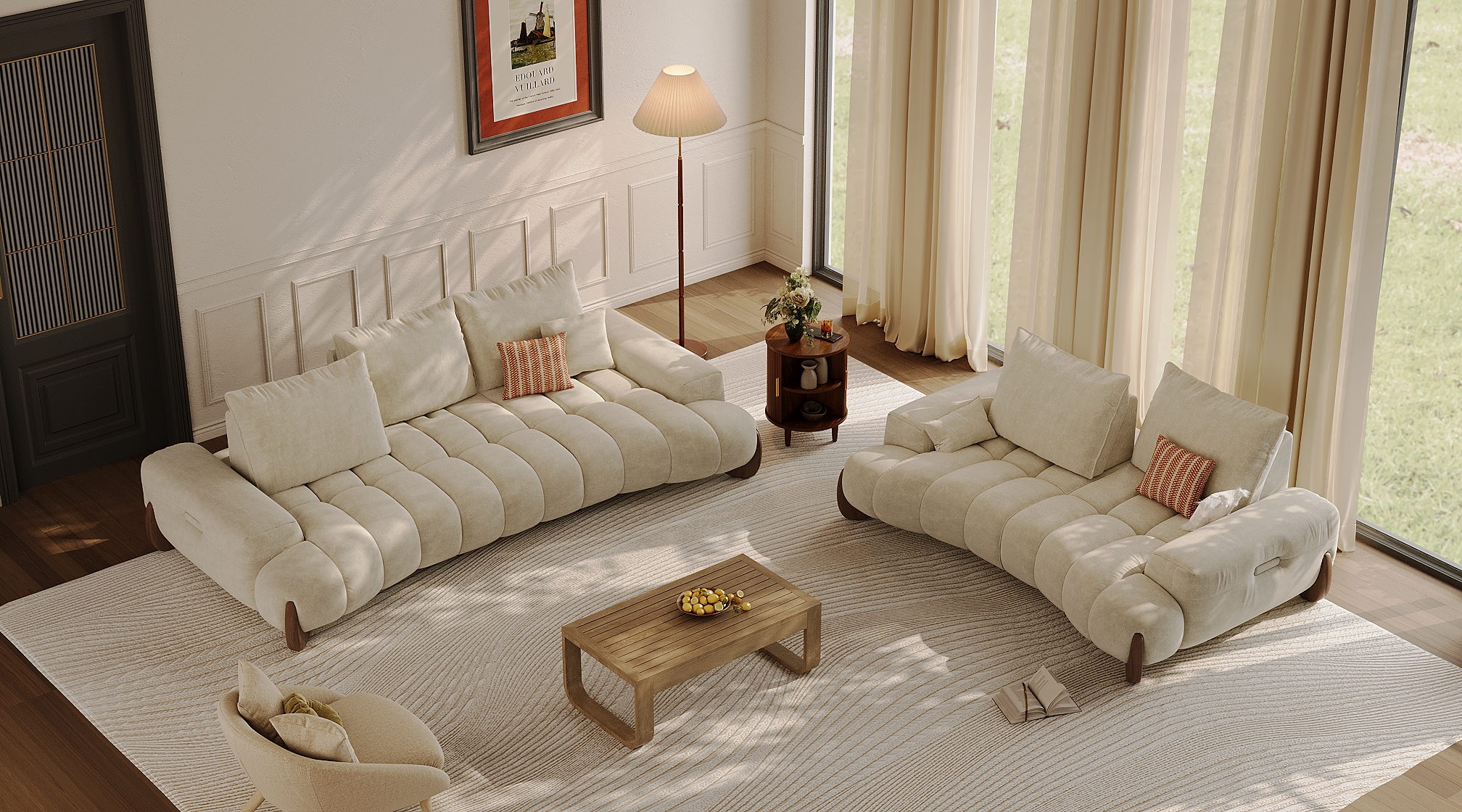
PAA-style question: How close should a loveseat be to a sofa?
Place a loveseat 3 to 6 feet from a sofa for good conversation and flow. The distance depends on room size; keep enough space for a side table or a walking path.
PAA-style question: Is it okay to float a sofa and loveseat?
Yes. Floating furniture can work if you keep the command position and allow clear pathways. Use a rug or console table behind sofas to anchor floating pieces.
Step-by-Step Guide to Arrange a Sofa and Loveseat
This simple plan helps you place seating fast.
-
Identify the focal point.
- Use a fireplace, TV, large window, or art. Center the sofa-loveseat arrangement around it.
-
Mark the entrance and traffic paths.
- Leave 30–36 inches for main walkways. Avoid blocking doors.
-
Position the main sofa in command position.
- Face the door or view. Keep a solid wall behind if possible.
-
Add the loveseat based on function.
- For conversation: place opposite or at right angles (L-shape).
- For TV: place parallel to the sofa with a balanced distance.
-
Anchor with a rug and side table.
- The rug should fit under front legs. Add a central coffee table sized to leave clear legroom.
-
Fine-tune with lighting and accessories.
- Add floor lamps for balance. Use pillows and throws to tie pieces together.
Follow these steps to apply Feng Shui Sofa and Loveseat Placement to almost any living area.

Common Layouts and Examples
Use these layouts based on room shape and use.
-
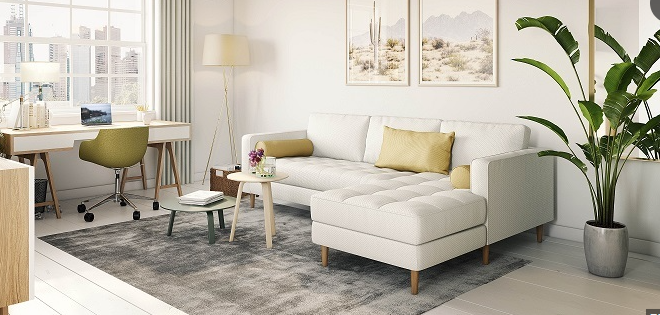
- Sofa and loveseat form a right angle. Good for intimate chats and open rooms.
-
Parallel layout
- Sofa opposite loveseat. This works in wide rooms and creates a clear seating zone.
-
Facing layout with coffee table
- Both pieces face each other with a table between. Ideal for conversation and socializing.
-
Floating arrangement
- Pieces float away from walls in large rooms. Anchor with rugs and a low console to keep support.
-
Diagonal anchor
- Place a loveseat or sofa slightly angled toward the focal point to open flow or soften a corner.
Each layout follows Feng Shui Sofa and Loveseat Placement rules: command, support, flow, and balance. Pick the pattern that suits daily use and traffic.
Balancing Elements, Color, and Accessories
Feng Shui cares about more than shape. Elements and color matter.
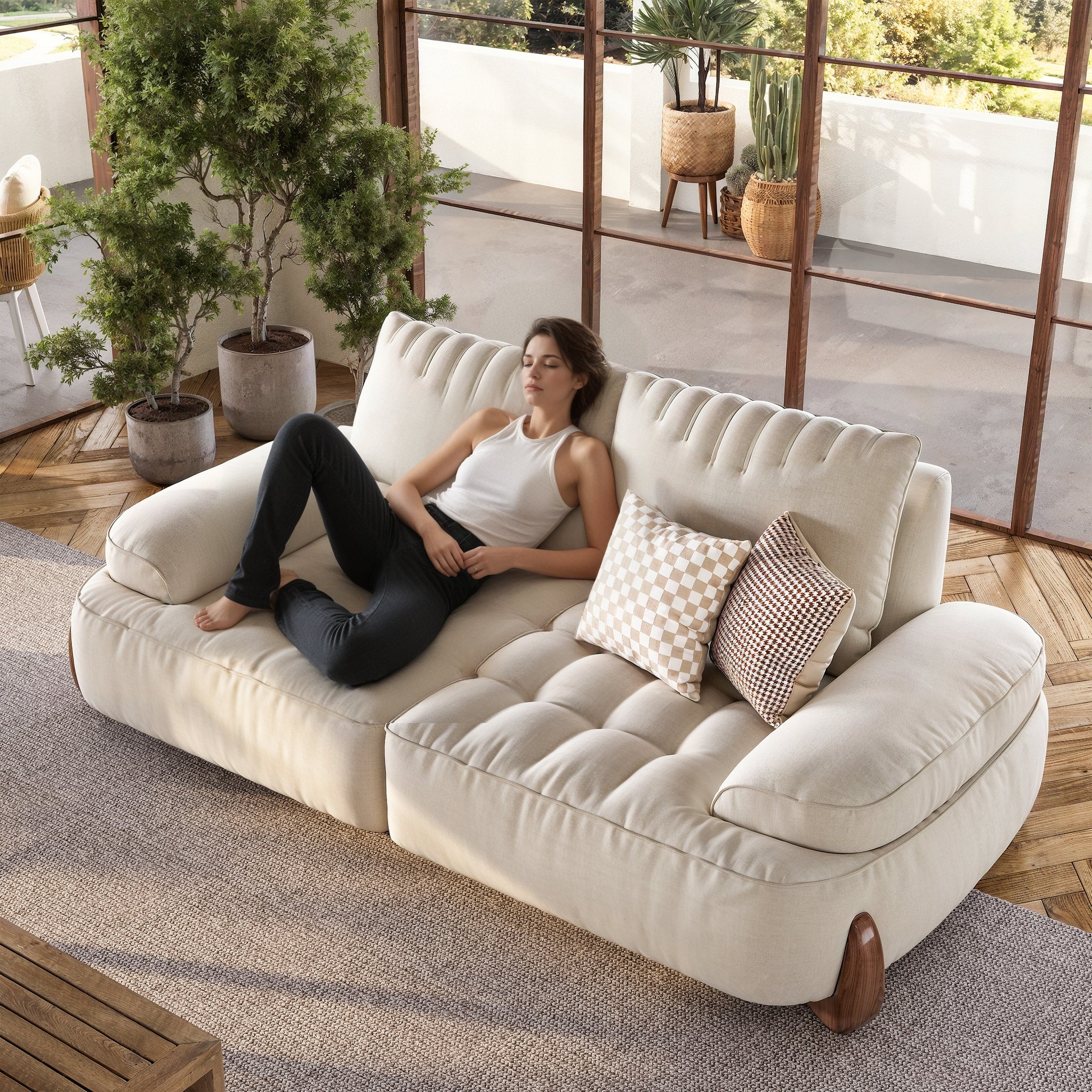
- Colors: Choose calm hues near the focal point. Soft neutrals and warm tones invite relaxation.
- Materials: Natural fabrics and wood frames add grounded energy. Avoid too much metal if you want warmth.
- Accessories: Use plants to soften corners. Mirrors can expand space, but place them carefully so they don’t reflect the door directly.
- Lighting: Balanced light removes shadows and improves chi flow. Mix overhead and side lighting.
- Symmetry: Two matching lamps or cushions on each piece brings visual calm.
These choices support your Feng Shui Sofa and Loveseat Placement by reinforcing balance and comfort.
Mistakes to Avoid and Troubleshooting
Learn from common errors I’ve seen in real rooms.
-
Blocking the door
- Don’t place seating directly in line with the entry. It makes people feel exposed.
-
Overcrowding the room
- Too many pieces block chi and create noise and stress.
-
Floating without anchor
- Floating furniture without a rug or console feels unstable.
-
Mismatched scale
- A tiny loveseat beside a giant sofa looks off and unbalanced.
-
Ignoring function
- Arrange for how you live. A TV-centered family room needs a different layout than a quiet reading space.
If a room feels off, move one piece at a time. Test new positions for a day. Small moves reveal the best setup.
Personal Experience: Lessons from Real Projects
I worked on many living rooms. I shifted sofas and loveseats to help families feel better in their homes.
-
Case: Small living room with tight entry
- I placed the sofa against the back wall and positioned the loveseat at a right angle. Conversation improved and entry felt open.
-
Case: Open-plan loft with floating furniture
- I floated a sofa and added a narrow console behind it. The room gained flow and a sense of support.
What I learned: small changes matter. A few inches can change how people sit and talk. Test placements. Trust what feels right.
Frequently Asked Questions of Feng Shui Sofa and Loveseat Placement
How do I place a sofa and loveseat for better conversation?
Place them facing each other or in an L-shape with 3 to 6 feet between. Add a central table and keep pathways clear.
Can I put a loveseat in front of a window?
Yes, if the loveseat does not block the view or the door and has a low back to keep energy open. Use a light curtain or plant for balance.
Is symmetry required in Feng Shui Sofa and Loveseat Placement?
Symmetry helps create calm but is not required. Balanced visual weight and matching heights do the same job.
What distance should I leave behind a sofa?
Leave 12–18 inches if the sofa is near the wall, or 30–36 inches if people need to walk behind it. Keep space functional.
Can I place a sofa diagonally for Feng Shui?
Yes. A gentle angle can soften flow and open sight lines. Avoid extreme angles that block traffic.
How important is the coffee table in placement?
Very. A proper coffee table anchors the seating and supports balance. Choose a size that leaves clear legroom and easy reach.
Conclusion
Good Feng Shui Sofa and Loveseat Placement makes rooms feel safe, open, and sociable. Follow command position, back support, clear pathways, and balanced scale. Test layouts, trust your senses, and adjust until the room feels right. Try one change this weekend: move the loveseat to face the sofa or add a console behind a floating couch. Share your result, subscribe for more tips, or leave a comment about your room.