
Place the sofa and loveseat facing or in an L-shape to maximize balance and flow.
I’ve arranged dozens of square living rooms for clients and my own home. I know how to arrange a sofa and loveseat in a square living room so the space looks balanced, feels roomy, and supports daily life. This guide walks you step-by-step through measuring, layout choices, styling, and common pitfalls so you can create a comfortable, stylish square living room quickly.
Assess your square living room
Measure the room first. Note wall lengths, doorways, windows, radiators, and the location of the TV or fireplace. A simple floor plan on paper or an app helps you test layouts before moving heavy furniture.
Think about how you use the room. Do you want a TV area, a conversation area, or both? That choice guides how to arrange a sofa and loveseat in a square living room.
Check circulation paths. Aim for at least 30 inches of clear walking space around furniture to avoid bumping into corners. Small shifts often make the room feel more open.
Consider scale and proportion. Large sofas can overwhelm a small square room. A compact sofa with a matching loveseat often looks more balanced than trying to cram a sectional into a tight square.
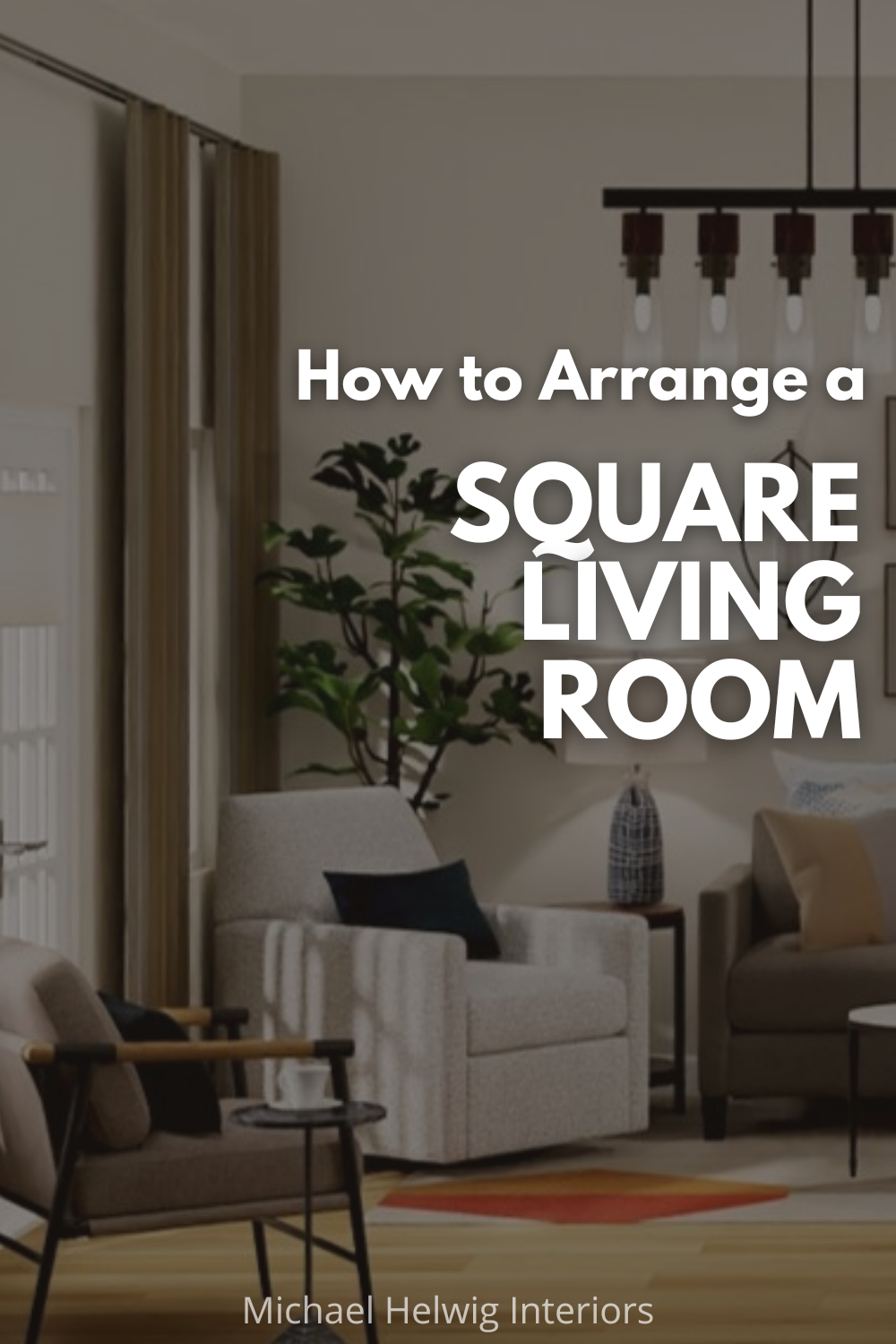
Source: michaelhelwiginteriors.com
Layout ideas for a sofa and loveseat in a square living room
Facing arrangement
- Place the sofa and loveseat opposite each other. This creates a focused conversation zone and works well with a central coffee table.
- Use this when the room’s focal point is a fireplace or central rug.
L-shape arrangement
- Place the sofa and loveseat perpendicular to form an L-shape. This is the most common way to arrange a sofa and loveseat in a square living room.
- It opens the rest of the room and defines a corner for seating.
Split arrangement
- Float the sofa against one wall and the loveseat against the opposite wall. This works in larger square rooms to balance the space.
- Add a rug and coffee table to tie both pieces together.
Corner anchoring
- Push one piece into a corner and angle the other slightly inward. This can free floor space for a reading nook or desk.
- Ideal when the room has multiple doors or windows.
Symmetrical layout
- Mirror the sofa and loveseat around a central focal point such as a fireplace or TV. Symmetry gives a formal, polished look.
- Add matching side tables or lamps for balance.
Floating layout
- Float both pieces away from the walls to create pathways and a cozy central area. Use a rug to anchor the seating group.
- Best in larger square rooms where walkways are needed.
PAA-style questions people ask
How close should a sofa and loveseat be in a square living room?
Keep the seating pieces about 36 to 48 inches apart for easy conversation and coffee table access. Reduce to 30 inches in very small rooms to maintain function.
Is it better to place furniture against walls in a square room?
Not always. Floating furniture often creates better flow and a more intimate seating area when you arrange a sofa and loveseat in a square living room. Use a rug to show the seating zone.
Where should the TV go in a square living room?
Place the TV on the wall opposite the primary sofa or on a swivel stand for flexible viewing. Ensure a comfortable viewing distance of about 1.5 to 2.5 times the screen diagonal.

Source: housedesigner.com
Step-by-step arrangement guide
- Measure and draw
- Measure room width and depth, door swings, and windows. Sketch a simple plan with furniture dimensions.
- This prevents surprises and saves time.
- Choose the focal point
- Decide whether the focal point is a fireplace, TV, or view. Orient the sofa and loveseat toward that focal point.
- If you have two focal points, create zones: one for TV and one for conversation.
- Pick a layout style
- For cozy conversation, arrange the sofa and loveseat facing each other.
- For open flow, use an L-shape with the sofa as the anchor and the loveseat as the partner.
- Size the rug and coffee table
- Use a rug that at least reaches under the front legs of both the sofa and loveseat. This ties them together visually.
- Choose a coffee table about two-thirds the length of the sofa for balanced scale.
- Leave walking space
- Keep 30 to 36 inches between furniture groups and main walkways. This keeps the room usable and safe.
- Allow at least 18 inches between the sofa and coffee table for legroom.
- Add side tables and lighting
- Place side tables next to each seating piece for drinks and lamps.
- Use layered lighting: overhead, task, and accent lights to make the space adaptable.
- Test and tweak
- Live with the setup a few days. Small moves—an inch here or an angle there—often improve comfort and flow.
- Take photos to spot imbalances you don’t notice standing in the room.
Personal note from my experience
- I once set a loveseat perpendicular to a sofa in a small square living room and found the TV angle was awkward. Angling the loveseat 10 degrees improved sight lines and made the space feel intentional. Small adjustments matter.

Source: spoak.com
Styling, scale, and balance
Choose scale wisely
- Match furniture sizes to the room. In a small square living room, use low-profile sofas and compact loveseats.
- Bulky arms and deep seats can make the room feel crowded.
Create visual balance
- Balance weight by placing a heavy sofa on one side and anchoring the other side with a loveseat plus a floor lamp or bookshelf.
- Symmetry is not required. Asymmetry with equal visual mass works well.
Textiles and color
- Use lighter colors to open a small square living room. Contrast a darker sofa with lighter walls and accessories.
- Add throw pillows and a cozy blanket to the loveseat to create harmony with the sofa.
Art and eye level
- Hang art at about 57 to 60 inches from the floor to the center of the piece. Keep art proportional to the sofa or loveseat below it.
- A long, narrow piece of art works better above a sofa. Two smaller pieces can balance a loveseat.
Practical storage and surfaces
- Use nesting tables, an ottoman with storage, or a slim console behind a floating sofa to keep the space tidy.
- Keep pathways clear by placing storage pieces against walls or under benches.

Source: southtexasfurniture.com
Lighting, traffic flow, and function
Plan for tasks
- Add task lighting for reading on the loveseat and ambient light near the sofa for watching TV.
- Table lamps on side tables and a floor lamp behind a loveseat work well.
Consider natural light
- Arrange seating to enjoy daylight without creating glare on the TV. Sheer window coverings soften light and keep privacy.
Maintain clear paths
- Never block doors with the sofa or loveseat. Keep main entry paths at least 30 inches wide.
- If the room serves multiple functions, use furniture as dividers—the back of a sofa can separate seating from a workspace.
Flexible options
- Use lightweight loveseats that can be moved for gatherings.
- Swivel chairs complement a sofa and loveseat when you need flexible sight lines.

Source: southernmotion.com
Common mistakes to avoid
Overcrowding the room
- Trying to fit too many pieces makes the space feel smaller. Select fewer, better-scaled items.
Pushing everything against walls
- This can make a square living room feel like a waiting room. Try floating the seating group toward the center.
Ignoring focal points
- If the TV or fireplace is awkwardly placed, the seating will feel off. Reorient furniture toward the main focal point.
Wrong rug size
- A rug that’s too small breaks the seating area. Aim to include at least the front legs of the sofa and loveseat on the rug.
Poor lighting
- Relying on one overhead light flattens the space. Use layered lighting for depth and warmth.
Not testing layouts
- Moving pieces until they feel right helps. Don’t settle for the first arrangement unless it functions well.

Source: thehoneycombhome.com
Frequently Asked Questions of How to Arrange a Sofa and Loveseat in a Square Living Room
How far should a coffee table be from a sofa and loveseat?
Aim for about 18 inches between the coffee table and the sofa or loveseat to give enough legroom and space to move. In tight rooms, 12 to 14 inches is acceptable.
Can I place both the sofa and loveseat against walls in a square room?
Yes, you can, but this often makes the room feel less cozy. Floating at least one piece or adding a rug helps define the seating area and improves flow.
What is the best rug size for a sofa and loveseat in a square living room?
Choose a rug that extends under the front legs of both pieces, ideally 8 inches beyond the furniture on each side for small rooms. For larger squares, a rug that fits all seating legs is ideal.
Should the sofa face the TV or the focal point in a square living room?
Prioritize the primary activity. If you watch TV most, face the sofa toward the TV. If conversation or a fireplace is primary, orient toward that focal point.
How do I make a small square living room feel larger with a sofa and loveseat?
Use low-profile furniture, light colors, a single rug to anchor furniture, and float pieces slightly off the walls. Keep pathways clear and use mirrors to reflect light.
Is it okay to mix styles between a sofa and loveseat?
Yes. Mixing styles works if you match scale, color palette, or leg and cushion lines. Keep one unifying element, like fabric tone or wood finish, for cohesion.
What should I do if doors or windows limit furniture placement?
Work around fixed elements by floating furniture or using smaller-scale pieces. Consider multipurpose furniture like storage ottomans to reduce clutter.
Conclusion
Arranging a sofa and loveseat in a square living room is about balance, scale, and function. Measure first, pick a focal point, and test L-shape or facing layouts to see which fits your life. Use rugs, lighting, and side tables to anchor the seating and maintain clear pathways. Try one arrangement for a few days, then tweak small angles, distances, and accessories until it feels right.
Take action today: measure your room, sketch two layouts, and try the L-shape and facing options to see which works best. Share your photos or questions below to get feedback.