No, using undiluted vinegar directly on a wooden coffee table is generally not recommended due to its acidity, which can damage finishes.
Many homeowners seek natural and effective cleaning solutions for their living spaces, and vinegar often emerges as a popular, seemingly versatile option. However, when it comes to the delicate surfaces of wooden furniture, particularly cherished pieces like a wooden coffee table, the conventional wisdom surrounding vinegar’s cleaning power requires a more nuanced understanding. Our expertise in furniture care and material science allows us to delve deep into why this common household staple can be more detrimental than beneficial for your wood, and what safer, more effective alternatives exist to maintain your table’s beauty and longevity.
Why Vinegar Poses a Risk to Wooden Surfaces
Understanding the chemistry behind cleaning is crucial for proper furniture maintenance. Vinegar, specifically white distilled vinegar, is an acetic acid solution, typically around 5% acidity. While this acidity is beneficial for dissolving mineral deposits and grime on hard, non-porous surfaces like glass or ceramic, it reacts very differently with wood.
Wood, by nature, is porous, and most wooden coffee tables are protected by a finish. These finishes—whether polyurethane, lacquer, shellac, wax, or oil—are designed to seal the wood, protect it from moisture and wear, and enhance its appearance. When you introduce an acid like vinegar to these finishes, especially repeatedly or in high concentrations, you risk chemical reactions that can compromise their integrity. The acid can begin to break down the protective layers, leading to various forms of damage that diminish the table’s aesthetic appeal and structural defense.

Understanding Wood Finishes and Vinegar’s Impact
The way vinegar interacts with your wooden coffee table largely depends on the type of finish applied. Not all wood finishes are created equal, and their resilience to acidic substances varies significantly.
- Polyurethane and Lacquer Finishes: These are common, durable finishes that form a protective plastic-like layer over the wood. While tough, constant exposure to vinegar can etch these surfaces, causing them to dull, lose their sheen, and eventually weaken. Over time, the clear, protective layer can become hazy or even sticky.
- Wax and Oil Finishes: These finishes penetrate the wood or create a softer, more permeable layer. Vinegar is particularly damaging to these types, as it can strip away the wax or oil, leaving the wood exposed, dry, and vulnerable to moisture damage and stains. My own experience includes observing how quickly a beautifully maintained antique table with an oil finish deteriorated after a well-meaning relative tried to clean it with a vinegar solution, stripping away years of carefully built patina.
- Shellac Finishes: Shellac is an older, more delicate finish. It is alcohol-soluble, but acids can also degrade it, causing it to whiten or become brittle.
- Unfinished or Raw Wood: Using vinegar on unfinished wood is almost guaranteed to cause discoloration or water stains, as the acid and moisture are absorbed directly into the wood grain without any protective barrier. This can also lead to warping or swelling.
The chemical reaction doesn’t just happen instantly; it’s often a cumulative effect. A single, highly diluted wipe might seem harmless, but repeated exposure contributes to gradual degradation of the finish on your wooden coffee table.
The Risks and Damage Associated with Using Vinegar on Wood
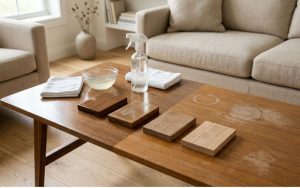
Despite its appeal as a natural cleaner, using vinegar on a wooden coffee table carries several significant risks that can lead to irreversible damage. My years in furniture restoration have shown me countless examples of beautiful pieces marred by well-intentioned but misguided cleaning efforts.
- Dulling and Stripping: The most common immediate effect is a dulling of the finish. Vinegar’s acidity can microscopically etch the surface, removing the shine and leaving it looking lifeless. On oil or wax finishes, it can actively strip away the protective layer, leaving the wood feeling dry and exposed.
- Water Stains and Discoloration: Vinegar is mostly water. If left to sit, or if the finish is compromised, the water content can seep into the wood, creating unsightly water rings or dark spots. The acidity can also react with the tannins in certain wood types (like oak), leading to dark, permanent discoloration.
- Weakening of Adhesives: For veneered wooden coffee tables or those with intricate inlays, strong cleaning agents can weaken the adhesives holding these delicate parts together, potentially leading to lifting or separation.
- Long-Term Damage and Increased Vulnerability: Stripping the finish leaves the wood unprotected. This makes your wooden coffee table highly susceptible to everyday spills, scratches, humidity fluctuations, and UV light, leading to accelerated aging and costly repairs. It’s akin to removing the skin’s protective barrier, making it prone to infection.
Is distilled white vinegar safe for all wood finishes? No, its acidity can be detrimental to many common finishes like polyurethane or lacquer, breaking down their protective qualities over time.
What happens if you clean wood with vinegar? Depending on the wood’s finish and the vinegar’s concentration, it can dull the surface, strip protective layers, or leave water marks, significantly reducing the table’s lifespan and appearance.

Source: auramodernhome.com
When Might Vinegar Be Used (with extreme caution)
While generally advised against, there are very limited and specific scenarios where a highly diluted vinegar solution might be considered for a wooden coffee table, but always with extreme caution and only after testing in an inconspicuous area. This is not for routine cleaning.
- To Remove Stubborn Hard Water Spots (very localized and diluted): If you have a stubborn, localized hard water spot on a well-sealed, durable finish (like polyurethane), a highly diluted solution (e.g., 1 part vinegar to 10-20 parts water) dabbed on with a cotton swab for a very brief moment and immediately wiped dry might break down mineral deposits. This is a last resort, however, and carries significant risk.
- To Remove Old Wax Buildup (on certain, robust finishes): For very old, thick wax buildup that standard methods fail to remove, a slightly stronger, yet still diluted, vinegar solution could potentially be used on some very robust, modern polyurethane finishes. However, this is a specialized task usually undertaken by professional restorers, as it can easily strip the actual finish beneath the wax.
It is crucial to emphasize that these are exceptions, not rules. In nearly all cases, safer, purpose-specific wood cleaning products are a superior choice. Using vinegar for regular cleaning of a wooden coffee table is a recipe for damage.
Are there any instances where vinegar is acceptable for wood? Only in highly diluted forms for very specific, stubborn issues like hard water spots, and always with caution, never for routine cleaning, especially on delicate finishes.

Source: reddit.com
Safer Alternatives for Cleaning Wooden Coffee Tables
Rather than risking damage with vinegar, numerous safe and effective products and methods exist for cleaning and maintaining your wooden coffee table. My professional advice is always to prioritize prevention and use products specifically designed for wood.
- Mild Dish Soap and Water: For general cleaning of everyday grime and dust, a very dilute solution of mild dish soap (like Dawn) and water is excellent.
- Mix a few drops of soap into a bowl of warm water.
- Dampen a soft microfiber cloth, wring it out thoroughly until it’s barely damp.
- Wipe down the table.
- Immediately follow with a dry, clean microfiber cloth to remove all moisture.
- Commercial Wood Cleaners: Invest in a high-quality commercial wood cleaner specifically formulated for furniture. These products are pH-balanced and often contain conditioning agents that protect the finish.
- Always read the label for instructions.
- Spray onto a cloth, not directly onto the wooden coffee table, and wipe.
- Wood Polish or Furniture Wax: For adding shine and an extra layer of protection, a good wood polish or furniture wax can be applied periodically. These also help to repel dust and moisture.
- Apply sparingly with a soft cloth.
- Buff to a gentle sheen.
- Microfiber Cloths: These are indispensable for dusting and light cleaning. Their fine fibers effectively trap dust without scratching the surface.
- Water Rings: For fresh water rings, a hairdryer on a low setting, moved continuously, can sometimes evaporate the moisture. For older rings, specialized water ring removers or a paste of mayonnaise (left for a few hours) can sometimes work. Always test first.
Proper Care and Maintenance for Long-Lasting Wooden Coffee Tables
Beyond cleaning, consistent care and maintenance are paramount to preserving the beauty and integrity of your wooden coffee table for years to come. Think of it as preventative medicine for your furniture.
- Regular Dusting: Dust contains abrasive particles that can scratch the finish over time. Dust your wooden coffee table frequently with a soft, dry microfiber cloth.
- Immediate Spill Cleanup: Act quickly! Any spill, especially liquids, should be blotted up immediately with a soft, clean cloth. Avoid rubbing, as this can spread the liquid or push it deeper into the finish.
- Use Coasters and Placemats: This is perhaps the simplest yet most effective preventative measure. Coasters protect against water rings and heat damage from hot beverages. Placemats prevent scratches and stains from plates or decorative items.
- Control Humidity and Temperature: Wood is a natural material that expands and contracts with changes in humidity and temperature. Extreme fluctuations can lead to cracking, warping, or joint separation. Maintain a relatively stable environment (around 40-50% humidity and 68-72°F) in your home.
- Avoid Direct Sunlight: Prolonged exposure to direct sunlight can fade and dry out the wood finish, leading to cracking or discoloration. Position your wooden coffee table away from direct sun, or use curtains/blinds to filter light.
- Periodic Re-finishing or Waxing: Depending on the finish and usage, your table may benefit from periodic re-waxing or a professional re-finishing every few years to restore its protective layer and luster. This is especially true if you notice the finish becoming dull, sticky, or showing signs of wear.

Source: auramodernhome.com
Frequently Asked Questions of Can You Use Vinegar on a Wooden Coffee Table?
Can I use diluted vinegar to clean my wooden coffee table?
While some highly diluted vinegar solutions might be used with extreme caution for specific issues, it is generally not recommended for routine cleaning due to the risk of dulling or damaging the finish. Safer alternatives are always preferred.
What kind of damage can vinegar cause to wood?
Vinegar can dull the finish, strip away protective layers like wax or oil, cause water stains or discoloration, and weaken adhesives, leaving the wood vulnerable to further damage.
What is the best natural cleaner for a wooden coffee table?
For a natural approach, a very mild solution of a few drops of gentle dish soap in warm water, applied with a barely damp microfiber cloth and immediately dried, is a much safer option than vinegar.
How can I remove a white water ring from my wooden coffee table?
For fresh water rings, try using a hairdryer on a low setting, moving it constantly over the spot. For older rings, a paste of mayonnaise left for a few hours or a specialized water ring remover might work, always testing in an inconspicuous area first.
How often should I clean my wooden coffee table?
For general dusting, clean your wooden coffee table a few times a week. For deeper cleaning with a mild soap solution, once a month or as needed for spills and grime is usually sufficient.
Conclusion
Navigating the world of cleaning solutions for your home often involves weighing the benefits of natural remedies against the specific needs of different materials. When it comes to your treasured wooden coffee table, the allure of vinegar’s natural cleaning power is largely outweighed by its potential for damage. Its acidic nature can strip finishes, dull surfaces, and leave your wood vulnerable, transforming a simple cleaning task into a costly repair.
Instead of risking the beauty and longevity of your wooden furniture with inappropriate cleaners, embrace the expertise-backed advice: stick to products specifically designed for wood. From mild soap solutions for everyday grime to specialized wood cleaners and protective polishes, these alternatives offer effective cleaning without compromise. By adopting these gentle yet powerful methods, coupled with consistent preventative care, you ensure that your wooden coffee table remains a focal point of beauty and function in your home for many years to come. Take the time to understand your furniture’s needs; it’s an investment that truly pays off in preserved elegance. Explore our additional resources on furniture care for more insights and tips on maintaining all your cherished wooden pieces.