
A dining room buffet looks best with balanced layers, useful storage, and decor that supports the room’s style.
Learning how to decorate a dining room buffet is less about filling every inch and more about creating a calm, useful display. With the right mix of height, texture, color, and empty space, your buffet can become a strong focal point for daily meals, holiday dinners, and relaxed gatherings. This guide shares practical styling methods, common mistakes, and tested ideas for making your buffet look polished without making it feel crowded.
Start With the Buffet’s Size and Style
Before adding decor, study the buffet itself. Measure its length, depth, and height. Note the wood tone, hardware, shape, and design style. These details should guide every item you place on top.
A modern buffet may suit glass, metal, smooth ceramics, and simple art. A traditional sideboard may look better with framed artwork, brass accents, lamps, or classic serving pieces. A rustic buffet often works well with woven baskets, aged wood, stoneware, and natural branches.
When learning how to decorate a dining room buffet, begin with the furniture instead of the accessories. The buffet is the foundation. Your decor should support its character, not compete with it.
Check the wall behind the buffet, too. A long blank wall may need one large artwork piece. A narrow wall may look better with a mirror or a small group of prints. Consider nearby furniture, such as the dining table, chairs, china cabinet, and bar cart. The entire room should feel connected.

Choose a Clear Decorating Style
A buffet looks more intentional when the decor follows one clear design direction. You do not need a perfect theme, but you do need a visual plan.
Popular dining room styles include:
• Traditional: Use framed art, candlesticks, porcelain, brass, and rich wood tones.
• Modern: Choose clean lines, sculptural objects, black accents, and limited colors.
• Farmhouse: Add woven textures, white ceramics, wood boards, and soft greenery.
• Coastal: Use pale blue, sand tones, glass, rope, and light natural wood.
• Transitional: Mix classic shapes with simple modern materials.
• Eclectic: Combine vintage finds, art, books, and personal objects with a shared color.
A useful rule is to repeat at least two elements across the display. For example, repeat black in a picture frame and a vase. You might repeat brass in candleholders and cabinet hardware. Repeated details help separate objects feel like part of one arrangement.
Avoid collecting random items from different rooms and placing them together without a plan. This can make the buffet feel like a storage shelf. Instead, select pieces that share color, texture, shape, or age.
Create a Strong Focal Point
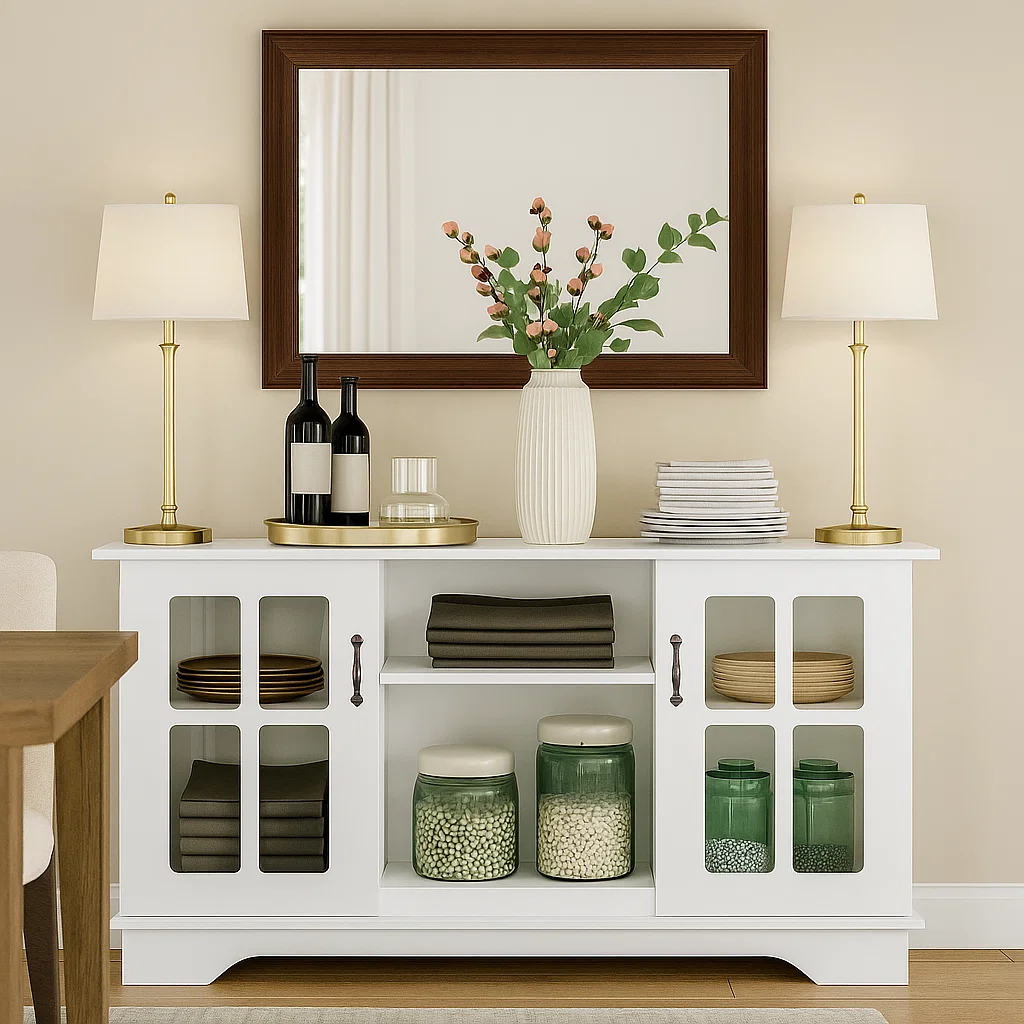
Every well-styled buffet needs one main focal point. This item should attract attention first. Common focal points include a large mirror, a piece of artwork, a tall vase, or a decorative wall panel.
A mirror is useful in a dining room because it reflects light and can make the space feel larger. Hang it so its center sits at a comfortable eye level. In many rooms, the lower edge of the mirror sits about 6 to 10 inches above the buffet, but the correct distance depends on the mirror’s size and the ceiling height.
Large artwork can add color and personality. Choose a piece that is about two-thirds the width of the buffet. This proportion usually looks balanced without overwhelming the furniture.
For a wide buffet, you can use one large piece or a balanced pair. A single oversized artwork piece creates a calm look. Two matching prints create order. A small gallery wall adds interest but needs careful spacing.
When deciding how to decorate a dining room buffet, do not let the focal point become too small. Tiny art above a long buffet can look lost. If your artwork is small, layer it with a larger tray, panel, or wall object behind it.

Source: stonegableblog.com
Use the Rule of Three
Groups of three often look natural because they create variety without visual confusion. Try combining:
• A tall item, such as a lamp or vase
• A medium item, such as framed art or a bowl
• A low item, such as a tray, stack of books, or small box
The items should not all have the same height. Different heights guide the eye across the display. Think of the arrangement as a gentle rise and fall rather than a straight line.
You can also group three objects by color or material. A ceramic vase, a stone bowl, and a white frame may work together because they share a soft color. A glass candleholder, brass tray, and metal sculpture may work because they share reflective surfaces.
Odd numbers are not a strict design law. A pair of lamps, for example, can look excellent on a long buffet. The important point is to create balance and purpose.
One of my most useful styling lessons has been to step back often. An arrangement can look beautiful up close but too heavy from across the room. Walk toward the dining table, doorway, and kitchen entrance to check how the display reads from different views.
Add Height With Lamps, Vases, or Branches
Height keeps a buffet from looking flat. Lamps are one of the most practical ways to add it. They provide soft light, frame the display, and make the dining room feel welcoming during evening meals.
Use one lamp on a small buffet or two lamps on a long one. Select lamps that leave enough space for serving dishes. The shade should not block artwork or sit so low that it appears buried behind other objects.
Tall vases and branches offer another easy solution. Fresh branches, dried stems, eucalyptus, olive branches, and seasonal greenery can all work well. Use a stable vase with a wide enough base so it will not tip when people move around the room.
Avoid placing tall decor directly in front of a mirror if it blocks most of the reflection. A partial overlap can look layered, but too much overlap makes both pieces less useful.
If your dining room has low ceilings, use vertical lines with care. A tall, narrow vase can add height without making the room feel crowded. If your ceiling is high, a larger arrangement can help connect the buffet to the upper wall.
Source: aosom.com
Layer Textures and Materials
A buffet display needs more than color. Texture gives it depth and keeps it from looking flat. Combine smooth, rough, soft, shiny, and natural surfaces.
Useful materials include:
• Wood for warmth
• Glass for lightness
• Ceramic for shape and color
• Metal for contrast
• Woven fibers for softness
• Stone for weight and natural texture
• Linen for a relaxed finish
For example, place a ceramic bowl on a wooden tray. Add a glass candleholder beside it and a small woven box underneath. The materials work together while each one keeps its own identity.
When considering how to decorate a dining room buffet, remember that texture matters even in a neutral room. A display in cream, beige, and brown can look rich when it includes linen, aged wood, ceramic, and glass.
Do not use too many shiny objects. Several reflective items can make the buffet feel busy, especially under bright ceiling lights. Balance polished surfaces with matte finishes.
Use Trays to Create Order
A tray can make several small objects look like one complete arrangement. It also protects the buffet surface from candle wax, moisture, and scratches.
Choose a tray that leaves some visible space around it. A tray that fills the entire buffet can make the top look cramped. Rectangular trays suit long buffets, while round trays soften furniture with strong straight lines.
Try placing these items on a tray:
• A bowl and two candleholders
• A small vase and decorative box
• A decanter, glasses, and bottle
• Seasonal objects and a short branch arrangement
• A stack of books with a small sculpture
Trays are especially useful when you need to clear the buffet for a meal. You can lift the entire arrangement at once and place it on a nearby console or counter.
Keep serving pieces within reach when possible. A beautiful display is more useful when it includes items you actually use. This may include a bowl for bread, a platter for dessert, or a box for cloth napkins.

Source: homebykmb.com
Balance Symmetry and Asymmetry
Symmetry creates a formal and peaceful look. Place matching lamps on each side of the buffet, then add a centered mirror or artwork. This method works well in traditional, classic, and transitional dining rooms.
Asymmetry feels more relaxed and artistic. Place a tall vase on one side and balance it with a stack of books, a bowl, or a lower sculpture on the other side. The objects do not need to match. They need similar visual weight.
Visual weight comes from size, color, darkness, and material. A black vase may carry as much attention as two pale ceramic pieces. A large light-colored bowl may balance a small dark sculpture.
To test balance, squint at the display or take a photo in black and white. If one side looks much heavier, move an item or add a small object to the lighter side.
Do not force perfect symmetry if it makes the display feel stiff. The best approach depends on your room, furniture, and personal style.
Decorate for Everyday Use
A dining room buffet should be attractive, but it should also support daily life. Leave enough clear space for serving dishes, drinks, flowers, or food during gatherings.
Keep delicate objects away from the front edge. This reduces the chance of knocking them down when people pass by. Use museum putty under fragile objects in homes with children, pets, or busy traffic.
Avoid placing open flames near curtains, artwork, branches, or other flammable materials. Use battery-operated candles if safety is a concern. Follow the care instructions for wood, stone, glass, and metal surfaces.
Storage is another important part of buffet styling. Use the cabinets for table linens, dishes, placemats, candles, and seasonal items. Small baskets or lidded boxes can hide clutter while keeping useful items nearby.
One mistake I often see is styling a buffet so heavily that the owners stop using it. The display should make life easier, not turn the furniture into a no-touch zone.

Source: angiesroost.com
Add Seasonal Decor Without Overcrowding
Seasonal styling can refresh a dining room, but it does not require a complete redesign. Change a few small elements instead of replacing everything.
For spring, use soft greenery, pale ceramics, and fresh flowers. In summer, add citrus colors, clear glass, or coastal textures. Fall works well with amber glass, warm wood, dried leaves, and earthy pottery. For winter, consider evergreen branches, brass, candles, and deep red or cream accents.
Keep a stable base throughout the year. A mirror, lamp, tray, or neutral vase can remain in place. Change only the flowers, branches, napkins, or small objects.
During holidays, avoid covering every surface with themed decor. A few carefully chosen pieces often look more elegant than a crowded collection. Leave breathing room around each item.
If you use fresh flowers, change the water often and protect the buffet from spills. A shallow waterproof tray beneath a vase can prevent moisture damage.
Common Buffet Decorating Mistakes
Even attractive objects can create a weak display when the arrangement lacks balance. Watch for these common problems:
• Too many small items: Small decor can look scattered. Group it on a tray or replace it with one larger piece.
• No height variation: Items placed in one straight line often look dull. Add a lamp, tall vase, or artwork.
• Oversized decor: A huge arrangement can block the wall art and make the buffet feel crowded.
• Too much matching: Identical objects everywhere can feel like a showroom. Mix related pieces for a more natural look.
• Ignoring function: Leave room for dishes and drinks when the buffet is used for entertaining.
• Weak wall connection: The artwork or mirror should relate to the width and style of the buffet.
• Clashing colors: Use a limited palette with one or two accent colors.
• Poor lighting: A dark display may disappear at night. Add lamps or warm, low-level lighting.
When learning how to decorate a dining room buffet, editing is often more important than adding. Remove one object at a time until the arrangement feels clear. Empty space is not wasted space; it gives the eye a place to rest.
Source: homewithkeki.com
A Simple Step-by-Step Styling Method
Use this process when you want a polished result without guesswork.
- Clear the buffet completely. Clean the surface and check for scratches, dust, or moisture.
- Choose the focal point. Select a mirror, artwork piece, or tall central object.
- Add the largest items. Place lamps, large vases, or substantial bowls first.
- Build a group of three. Combine tall, medium, and low pieces.
- Add texture. Introduce wood, glass, ceramic, woven material, or metal.
- Repeat a color. Connect the buffet to the dining chairs, rug, curtains, or artwork.
- Leave open space. Keep part of the surface clear for practical use.
- Check the view. Look at the buffet from the doorway, dining table, and side angles.
- Remove one item. This final edit often improves the arrangement.
This method works for both large sideboards and small dining room cabinets. Adjust the number of objects to fit the furniture. A narrow buffet may need only a mirror, one lamp, and a bowl.
How to Decorate a Dining Room Buffet on a Budget
You do not need expensive decor to create a refined buffet display. Start with pieces you already own, then shop slowly for items that fill real gaps.
Affordable ideas include:
• Use a thrifted frame with a new print.
• Fill a simple vase with branches from your yard, where appropriate.
• Stack attractive cookbooks to create height.
• Place a folded linen napkin in a ceramic bowl.
• Use a wooden cutting board as a tray.
• Paint an old frame or vase to match the room.
• Display family plates, travel finds, or inherited serving pieces.
• Move decor from another room instead of buying new items.
A budget display becomes more attractive when the items have meaning. A family bowl or handmade vase can add more character than a costly object with no connection to your home.
For renters, use removable hooks, leaning artwork, and freestanding mirrors. These options reduce wall damage and make it easier to change the arrangement later.
How to Decorate a Dining Room Buffet for Entertaining
For dinner parties, style the buffet so it supports the flow of the meal. Place plates, napkins, and serving utensils where guests can reach them. Keep drinks in one area and food in another when possible.
You can create a simple serving station with:
• A large tray for glasses
• A bowl for napkins or bread
• A beverage dispenser or decanter
• Small labels for dishes
• A low floral arrangement that does not block conversation
Keep tall objects toward the back or to one side. Guests should be able to see and reach across the buffet without knocking into decor.
Remove fragile items before guests arrive. This small step protects your favorite pieces and reduces stress. A buffet should help you host with confidence, not make you worry about every movement.
For formal dinners, use matching serving pieces and candleholders. For casual meals, mix ceramics, wood, and woven pieces for a warmer feeling.

Source: homewithkeki.com
Frequently Asked Questions
What should I put on a dining room buffet?
Start with one focal point, such as a mirror or artwork, then add a lamp, vase, bowl, tray, or small sculpture. Choose items that match the room’s colors and leave enough clear space for serving dishes.
How do you decorate a buffet without making it look cluttered?
Use different heights, group small objects on a tray, and keep part of the surface empty. Removing one or two items often creates more balance than adding new decor.
Should a mirror be centered over a dining room buffet?
A mirror often looks best when centered over the buffet, especially in a symmetrical room. However, an off-center mirror can work when balanced by a tall lamp, vase, or artwork on the opposite side.
How many items should be placed on a buffet?
There is no fixed number because buffet sizes vary. A small buffet may need three to five pieces, while a long sideboard can support several grouped arrangements with visible space between them.
Can you put a television above a dining room buffet?
You can, but a television may change the room’s mood and compete with the dining area. If you use one, conceal cords, keep the surrounding decor simple, and avoid placing fragile objects directly below it.
What colors work well for dining room buffet decor?
Use colors already found in the room, such as the rug, curtains, chairs, artwork, or dishes. Neutral colors create a calm look, while one rich accent color adds depth without making the display feel busy.
How do you decorate a dining room buffet for Christmas?
Keep the main furniture and focal point in place, then add greenery, candles, ornaments, or seasonal ceramics. Use a limited palette and protect the buffet from wax, water, and scratches.
Conclusion
Learning how to decorate a dining room buffet becomes much easier when you focus on balance, purpose, and proportion. Begin with the buffet’s size and style, choose a clear focal point, add varied heights, and layer materials such as wood, glass, ceramic, metal, and greenery. Keep the display useful by leaving room for serving pieces and everyday items.
The best buffet arrangement reflects both the room and the people who use it. Start with what you own, remove anything that feels crowded, and make small changes until the display feels natural. Try one of these styling methods this week, then share your favorite buffet decorating idea or explore more dining room design guides for inspiration.