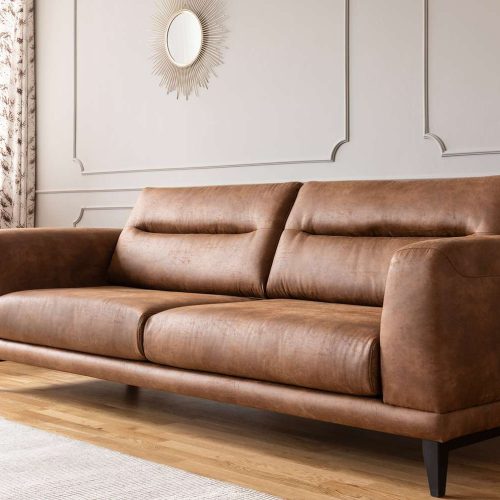
Dust, vacuum, spot clean, and condition with simple, safe ingredients.
I have cleaned hundreds of sofas for families and design studios. This guide explains How to Clean a Leather Sofa Naturally with clear steps, proven tips, and gentle methods. You will learn what works, what to avoid, and how to protect your leather for years.
Understand Your Leather Before You Clean
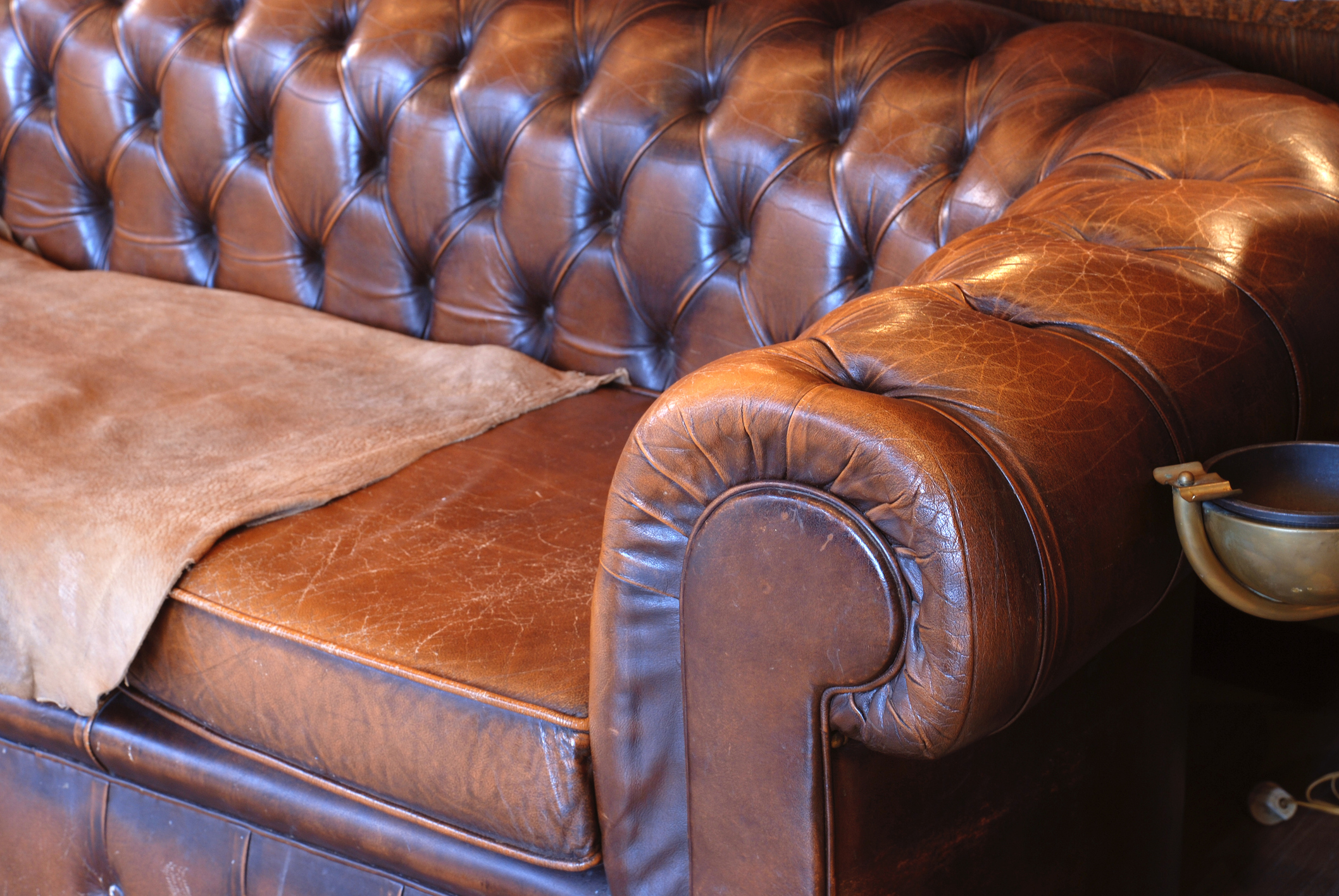
Not all leather is the same. Aniline leather is soft and porous. It marks easily and shows a rich patina. Semi-aniline has a light finish and is more forgiving. Pigmented or protected leather has a coating. It resists stains and cleans up faster.
Check your sofa tag or maker’s site. If you cannot find it, do a spot test. Choose a hidden spot. Use a drop of cleaner. Dab, wait 24 hours, and check for darkening, swelling, or color rub-off. Suede and nubuck are different. They need special tools. Do not use water-based methods on them.

Natural Tools and Cleaners You Already Have
You can keep this simple. Gather the right basics before you start. This keeps the process safe and fast. It also supports How to Clean a Leather Sofa Naturally without harsh products.
Essentials you need:
- Microfiber cloths. Use several. Keep them lint-free.
- Distilled water. Prevents mineral spots and rings.
- Mild, pH-neutral soap. Castile soap works well.
- White vinegar. Use only in high dilution for sticky grime.
- Soft brush. A small, clean brush lifts dust in seams.
- Baking soda or cornstarch. They absorb fresh oil.
- Beeswax or a natural balm. Jojoba or mineral-oil based is best.
Skip these:
- Bleach, ammonia, and alcohol. They strip color and dry leather.
- Baby wipes. They have additives and can damage the finish.
- Olive oil. It can go rancid and attract dirt.
- Harsh scrubbing tools. They scratch the surface.
Step-by-Step: How to Clean a Leather Sofa Naturally
This is the safe, simple routine. It respects leather and still gets results. It is also the best core plan for How to Clean a Leather Sofa Naturally.
-
Dry dust and vacuum
Use a soft brush and a HEPA vacuum on low. Lift dirt from seams and stitching. Wipe all surfaces with a dry microfiber cloth. -
Test your cleaner
Mix a small amount. Try it on a hidden area. Wait to check for changes. -
Mix a gentle solution
For general soil: add 3–4 drops of castile soap to 2 cups of distilled water. For sticky residue on protected leather: mix 1 part white vinegar to 10 parts distilled water. Never use vinegar on suede or nubuck. -
Lightly dampen, do not soak
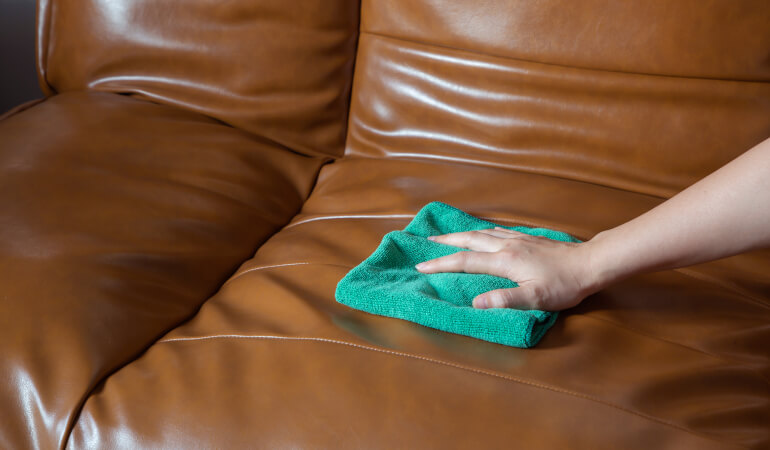
Dampen a microfiber cloth. Wring it well. It should feel barely wet. -
Wipe in sections
Work in small areas. Wipe with light, even strokes. Follow the grain. Avoid heavy pressure. -
Rinse and dry
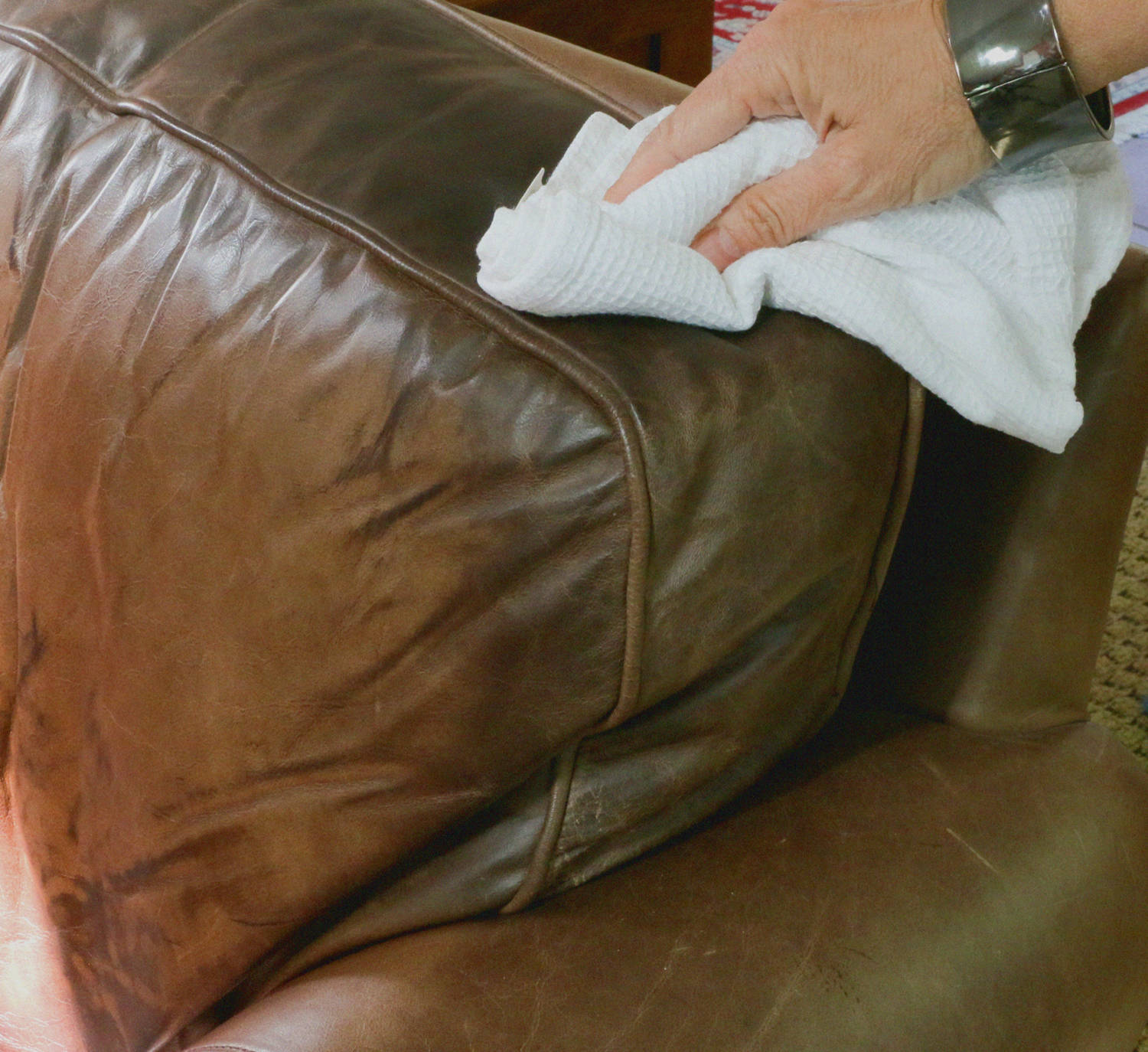
Wipe again with a clean cloth dampened with distilled water. Then buff dry with a third cloth. Do not leave moisture on the surface. -
Condition when dry
Wait 30–60 minutes. Apply a thin layer of a natural leather balm. Use circular motions, then buff. This keeps the leather supple. -
Let it rest
Give the sofa time to absorb the conditioner. Aim for 6–12 hours before heavy use.
Pro tip: If you are unsure about finish type, skip vinegar. Stick with soap and water. That still supports How to Clean a Leather Sofa Naturally with low risk.
:max_bytes(150000):strip_icc()/how-to-clean-suede-couch-4846972-04-8d071eef9a534227bf555da29bce6c6a.jpg)
Remove Common Stains the Natural Way
Stains happen. Stay calm. Act fast, but be gentle. The method changes with the stain and the leather.
Oil or grease
- Blot, do not rub. Use a dry cloth right away.
- Sprinkle baking soda or cornstarch. Let it sit 3–4 hours.
- Brush off, then clean the area with your mild solution.
Works best on protected leather. Aniline may darken. Test first.
Ink marks
- Use a cotton swab lightly dampened with isopropyl alcohol for pigmented leather only.
- Dab gently and stop at the first lift.
- Rinse with distilled water, then dry and condition.
Avoid this on aniline, suede, and nubuck. Call a pro if needed.
Dye transfer from jeans
- Use your soap-and-water solution.
- Wipe gently, working from the outside in.
- Repeat light passes. Do not scrub.
Deep transfer may need a pro cleaner.
Food and drink
- Blot the spill right away.
- Clean with the soap solution.
- Rinse with distilled water and dry.
Sugar can leave a tacky film. Follow with a light vinegar mix on protected leather only.
Mold or mildew
- Move the sofa to a dry, airy space.
- Wipe with a cloth dampened in 1:10 vinegar to water. Use on pigmented leather only.
- Dry fast and condition. Improve room humidity.
If growth returns, seek pro help and check for leaks.
This stain guide is a key part of How to Clean a Leather Sofa Naturally without harsh sprays.

Condition and Protect Leather Without Harsh Chemicals
Leather is skin. It needs moisture and protection. Natural products can do both, if used right.
What to use:
- Beeswax and jojoba balm. It nourishes and adds a light barrier.
- pH-balanced conditioners. Look for neutral, colorless options.
- Minimal oil. Too much oil can darken leather and attract dust.
How to apply:
- Use a thin coat with a clean cloth.
- Work in small circles.
- Buff to a soft sheen after 10 minutes.
- Repeat every 3–6 months, based on climate and use.
Extra protection:
- Keep the sofa out of direct sun. UV fades and dries leather.
- Keep room humidity between 40–55 percent.
- Use throws on high-wear spots. Rotate cushions.
A smart conditioner plan is central to How to Clean a Leather Sofa Naturally and keep it looking rich.
A Simple Care Routine That Works
Make care a habit. It saves time and money. It also keeps leather soft and bright.
Weekly
- Quick vacuum with a soft brush.
- Wipe with a dry microfiber cloth.
Monthly
- Wipe with the mild soap solution.
- Buff dry. Check seams and arms for wear.
Seasonal
- Deep clean as outlined above.
- Condition with a thin, even coat.
- Inspect for cracks, loose stitching, or color loss.
Use this routine if you want an easy plan for How to Clean a Leather Sofa Naturally all year.

Mistakes to Avoid and Safety Notes
Avoid these common errors. They cause most damage I see.
- Skipping the spot test. Unknown finishes can react fast.
- Using too much water. Water can stain or swell the hide.
- Scrubbing stains. Rubbing spreads damage and sets color.
- Using olive oil or furniture polish. They leave residue and can turn sticky.
- Cleaning in direct sun or near heat. Heat causes rapid drying and cracks.
- Ignoring humidity. Air that is too dry harms leather.
Keep safety first. Ventilate your space. Wear gloves if you have sensitive skin. Read your sofa care tag. These steps support How to Clean a Leather Sofa Naturally with less risk.

Real-World Tips From My Cleaning Work
A designer once called me about a pale aniline sofa with dark arm stains. Rubbing had made it worse. I dusted first, then used only distilled water and a drop of castile soap. Light, patient passes lifted most grime. A beeswax-jojoba balm evened the tone. The key was patience and thin layers.
Another family had dye transfer from new jeans. The urge was to scrub. We did small, gentle wipes with soap and water on the pigmented finish. The dye lifted over three rounds. A light conditioner finished the job. The lesson is simple. Less force, more passes.
My biggest lesson on How to Clean a Leather Sofa Naturally is this: go slow, use little liquid, and protect after.
Troubleshooting and When to Call a Pro
Sometimes natural care is not enough. Know when to stop and seek help.
Call a pro if:
- You see peeling finish, deep cracks, or wide color loss.
- The sofa is aniline, suede, or nubuck with a large stain.
- Ink or dye transfer has set for weeks.
- There is smoke, water, or mold damage.
- You tried DIY and the area turned darker or sticky.
A pro can do color touch-ups, deep extraction, or reconditioning. This choice protects your leather and keeps the value high. It still fits the spirit of How to Clean a Leather Sofa Naturally by preventing more damage.
Frequently Asked Questions of How to Clean a Leather Sofa Naturally
Can I use vinegar on all leather?
Use diluted vinegar only on pigmented or protected leather. Avoid it on aniline, suede, and nubuck because it may spot or dry the surface.
What is the safest method for daily care?
Dust with a dry microfiber cloth and vacuum seams. This aligns with How to Clean a Leather Sofa Naturally and prevents grit from scratching.
How often should I condition my sofa?
Every 3–6 months is enough for most homes. In dry climates or with heavy use, shorten the cycle to every 2–3 months.
Will baking soda ruin leather?
It is safe for short, light use on fresh oil stains. Do not grind it in, and always clean and condition after.
Can I use dish soap?
Mild dish soap may be too strong and can leave residue. A few drops of castile soap in distilled water is a safer, natural choice.
How do I fix a water ring?
Lightly dampen the whole panel with distilled water and wipe evenly. Dry and condition. This blends the ring into the larger area.
Is olive oil a good conditioner?
No. Olive oil can go rancid and attract dust. Use a beeswax-jojoba balm or a pH-balanced leather conditioner instead.
Conclusion
You now have a clear, safe plan for natural care. Start with dusting, clean with a mild solution, then protect with a thin conditioner. Work slow. Use little liquid. Respect the finish. These steps make How to Clean a Leather Sofa Naturally easy and reliable.
Put this guide to work today. Pick one section and start with a quick clean. Then upgrade to a seasonal condition this week. Want more practical home care tips? Subscribe, share your results, or leave a question for personalized help.