
Hallway decorating ideas can make narrow, forgotten spaces feel bright, useful, and connected to your home.
Hallways are more than paths between rooms. They shape the first impression of your home and can improve daily comfort when planned well. With the right color, lighting, storage, artwork, and scale, these hallway decorating ideas can turn an empty passage into a polished part of your interior design.
Why Hallway Decorating Matters
A hallway often works like the spine of a home. It connects private rooms, guides movement, and sets the mood before guests enter the main living areas. Yet it is often the last space people decorate.
Good hallway decorating ideas balance beauty with function. A hallway should look inviting, but it must also remain easy to walk through. Furniture that blocks the path, rugs that slide, or artwork placed too low can quickly make the space feel cramped.
When planning a hallway, consider these main goals:
• Improve light and visual space
• Create a clear walking path
• Add useful storage without clutter
• Connect the hallway with nearby rooms
• Show personal style through art and accessories
• Use durable materials in a high-traffic area
A well-designed hallway does not need a large budget. Paint, a mirror, better lighting, and one well-placed runner can create a strong change.

Start With the Hallway Layout
Before choosing decor, study the shape and use of the hallway. Measure its length, width, ceiling height, door swings, outlets, vents, and natural light. These details will guide every design choice.
A long hallway may need visual breaks. A short hallway may benefit from one strong focal point. A narrow hallway needs careful furniture placement, while a wide hallway can support a slim console or small bench.
Use this simple planning process:
- Measure the full length and width.
- Mark doors, windows, switches, and heating vents.
- Note where people walk most often.
- Identify dark corners or blank walls.
- Choose one main purpose, such as display, storage, or welcome.
- Select decor that leaves the walking route open.
In many homes, a clear passage of about 36 inches is a practical target. Homes with accessibility needs may require more space, so check local standards and the needs of the people who use the home.
One mistake I often see in hallway projects is buying furniture before measuring. A console may look slim in a store but feel bulky once doors open beside it. Measure first, then use painter’s tape on the floor to test the footprint.
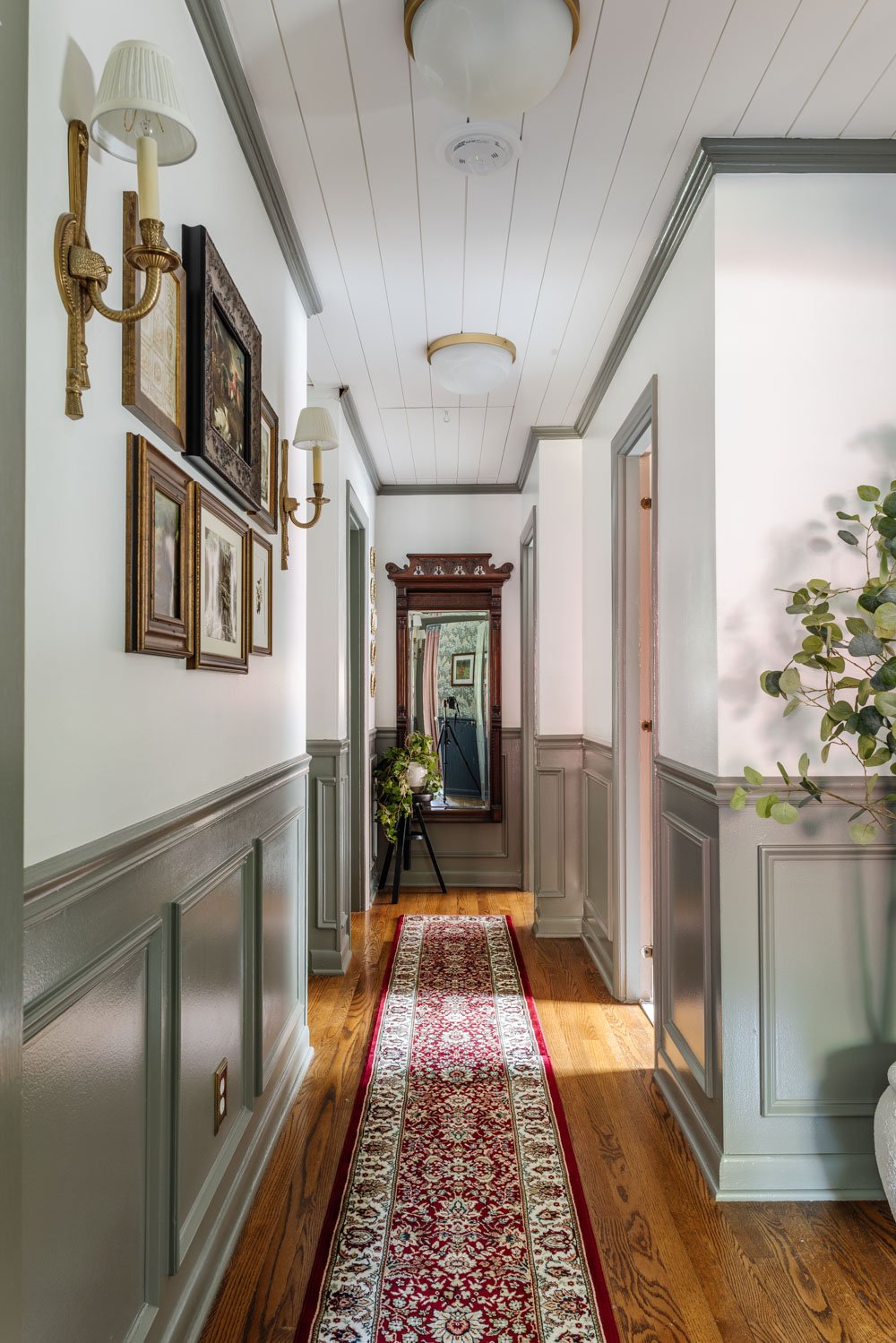
Source: blesserhouse.com
Choose a Hallway Color Scheme
Color has a strong effect on how a hallway feels. Light colors can reflect more light and make a narrow passage seem wider. Warm whites, soft beige, pale gray, muted green, and dusty blue are reliable choices for many homes.
However, a dark hallway does not always need a white makeover. Deep navy, charcoal, forest green, or terracotta can create a rich, dramatic look. This works best when the hallway has good lighting and the nearby rooms support the darker color.
Consider these hallway color strategies:
• Use one light color from the baseboard to the ceiling for a seamless look.
• Paint the ceiling a lighter shade to increase visual height.
• Add a darker color at the end of a long hallway to create depth.
• Use a bold color on one wall as a focal point.
• Match the hallway color with nearby rooms for a smooth transition.
• Use satin or eggshell paint for easier cleaning.
Paint finish matters in busy homes. Flat paint can hide small wall flaws, but it may be harder to clean. Satin and eggshell finishes offer a practical balance between softness and durability. Always test a sample because lighting can change the appearance of a color throughout the day.
For a classic look, use white trim with a soft wall color. For a modern look, paint the trim and walls in related shades. This reduces visual contrast and can make the hallway feel calmer.

Source: housebeautiful.com
Use Lighting to Brighten the Space
Many hallways have little or no natural light. A thoughtful lighting plan can make the space feel safer, warmer, and more finished. Use more than one light source when possible.
A central ceiling fixture provides general light. Wall sconces add warmth and can highlight artwork. Small accent lights can guide the eye toward a feature wall or architectural detail.
Useful hallway lighting ideas include:
• Install a flush-mount ceiling light in a low-ceiling hallway.
• Use a semi-flush fixture when you want more visual interest.
• Add sconces to long walls, keeping them clear of door swings.
• Place picture lights above artwork or a gallery wall.
• Use warm white bulbs for a comfortable residential feel.
• Add motion-sensor night-lights near bedrooms or stairs.
Light color is measured in Kelvin. Bulbs around 2700K to 3000K usually create a warm, welcoming glow. Bulbs around 3500K to 4000K look cooler and may suit a crisp, modern design. Keep the color temperature consistent with nearby rooms.
Safety should guide fixture placement. Do not use hanging lights where people may bump into them. Keep cords secured, and hire a qualified electrician for new wiring or hardwired fixtures.

Source: somewhatsimple.com
Add Mirrors for Light and Depth
Mirrors are among the most effective hallway decorating ideas for small or dark spaces. They reflect light and create the impression of extra depth. A large mirror can also provide a useful final check before leaving home.
Place a mirror opposite a window, light source, or attractive piece of art. Avoid reflecting a cluttered area, open closet, or messy doorway. The reflection becomes part of the design, so choose the view carefully.
Try these mirror styles:
• A tall mirror at the end of a short hallway
• A round mirror above a slim console
• A group of small mirrors for a collected look
• An arched mirror for a softer architectural shape
• A full-length mirror near the entry
Secure large mirrors to wall studs or use suitable anchors. Heavy frames can become dangerous if they fall. In homes with children or pets, choose safety-rated mounting hardware and avoid placing sharp-edged frames in tight walking areas.
I once used a large round mirror in a dim entry hall instead of adding several small accessories. The mirror reflected the ceiling light and made the area feel brighter without taking up floor space. The lesson was simple: one strong piece can often work better than many small ones.
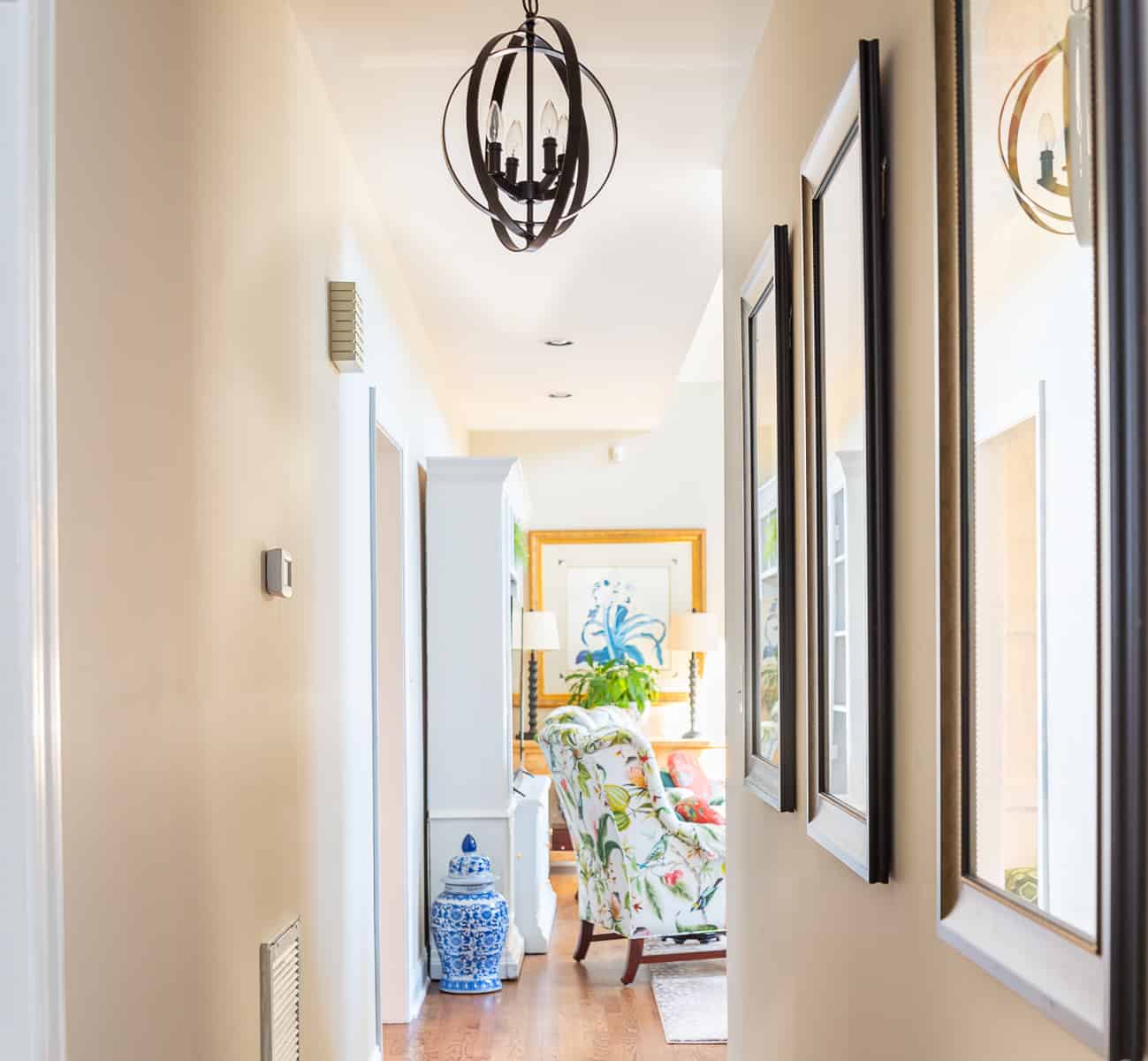
Source: worthingcourtblog.com
Create a Gallery Wall
A gallery wall can give a plain hallway personality. It also makes use of vertical wall space without narrowing the walkway. You can display family photographs, paintings, travel prints, botanical images, or simple graphic art.
Choose a common element to make the arrangement feel intentional. This element might be the frame color, image size, color palette, or subject matter.
For a balanced gallery wall:
- Arrange the pieces on the floor first.
- Keep the center of the arrangement near eye level.
- Use paper templates to test the layout.
- Leave even spacing between frames.
- Use sturdy hooks made for the frame weight.
- Take a photo before hanging the final pieces.
A hallway gallery wall does not need perfect symmetry. A grid feels clean and formal, while an organic arrangement feels relaxed. In a narrow space, keep frames shallow and avoid projecting objects that people can brush against.
For a more cohesive result, repeat one color from nearby rooms. For example, blue artwork can connect a white hallway with a blue living room. This small link helps the home feel designed as one story.

Source: somewhatsimple.com
Choose the Right Hallway Runner
A runner rug adds color, comfort, and texture. It can also protect flooring in a high-traffic area. Choose a low-pile style that allows doors to open and close without catching.
Leave a visible border of floor around the rug when possible. This border frames the runner and prevents the hallway from looking crowded. The runner should not block vents or create a trip hazard.
Look for these features:
• A non-slip backing or separate rug pad
• Durable fibers for frequent foot traffic
• A low pile for easy door clearance
• A pattern that hides everyday marks
• Washable construction for homes with pets or children
• A size that follows the hallway’s shape
A patterned runner can hide dust better than a solid pale rug. Geometric patterns suit modern homes, while Persian-style designs add warmth and history. Neutral stripes can make a hallway appear longer.
Do not rely only on a rubber backing. Check it often, especially on smooth floors. A rug pad should stay flat and fit fully beneath the runner.

Source: housebeautiful.com
Add Storage Without Creating Clutter
Hallway storage is useful near an entry, but it must stay slim. The best storage solves a clear problem, such as holding keys, shoes, bags, mail, or seasonal items.
Good hallway storage options include:
• A narrow console with drawers
• Wall-mounted hooks for coats and bags
• A small storage bench with a closed compartment
• Floating shelves for light objects
• A tall cabinet with doors
• Baskets placed under a console
Open storage is easy to access but can look messy. Closed storage creates a calmer appearance. In a busy family home, a mix of both often works well.
Use a tray on a console for keys and small items. Add a bowl for sunglasses or spare change. Keep the surface mostly clear so the hallway still feels open.
A common mistake is treating a hallway like a storage room. If every wall holds hooks, baskets, and furniture, the space becomes stressful rather than helpful. Set a limit for each person, and remove items that no longer serve a daily purpose.

Source: somewhatsimple.com
Decorate Narrow Hallways
Narrow hallways need visual lightness. Choose slim objects, pale colors, reflective surfaces, and vertical details. Avoid deep cabinets, wide benches, and large decor that extends into the path.
These hallway decorating ideas work well in tight spaces:
• Paint walls and trim in similar colors.
• Use a slim picture ledge instead of deep shelves.
• Hang art in a vertical arrangement.
• Choose a narrow runner with a flat weave.
• Install wall hooks instead of a standing coat rack.
• Use a mirror to reflect light.
• Keep the floor as open as possible.
You can also use the ceiling to add interest. A small patterned wallpaper on the ceiling or a decorative light fixture can draw the eye upward. This adds character without taking valuable wall or floor space.
For a long, narrow hallway, avoid placing identical small items all the way down both walls. That pattern can feel busy and tunnel-like. Instead, create one focal point at the end and use simple art along the sides.

Source: housebeautiful.com
Decorate Wide or Long Hallways
A wide hallway gives you more options. You may be able to add a console, bench, bookcase, or seating area. Still, every item should support movement and should not make the hall feel like a crowded room.
Break a long hallway into visual zones:
• A welcome area near the entrance
• A gallery section along the central wall
• A reading or seating spot near a window
• A display area for plants or collected objects
• A strong focal point at the far end
Repeat materials to connect these zones. A wood console, wood frames, and a woven runner can create a warm visual thread. Repeating one texture is often more effective than using many unrelated decorations.
A bold end wall can shorten the visual length of a very long hallway. Wallpaper, a dark paint color, a large artwork, or a decorative mirror can create that stopping point.
Avoid filling every empty section. Negative space gives the eye a place to rest and makes the decorations you choose feel more important.
Use Wallpaper, Paneling, or Molding
Wall treatments can give a hallway architectural character. Wallpaper adds pattern, while paneling and molding add depth and structure. These options work especially well in hallways because they create interest in a space with limited furniture.
Popular choices include:
• Vertical paneling to emphasize ceiling height
• Wainscoting for a traditional look
• Picture-frame molding for a refined design
• Grasscloth-style wallpaper for texture
• Removable wallpaper for renters
• Bold botanical prints for a dramatic effect
Use durable materials because hallways receive frequent contact from hands, bags, and furniture. Washable wallpaper can be a practical choice for family homes.
Before installing wallpaper, smooth the wall and check the pattern repeat. A small error becomes easy to notice in a long hallway. For molding, use a level and mark every measurement carefully.
If you rent, removable products may offer a temporary solution, but results vary by wall paint and installation method. Test a small hidden area first and follow the product directions.
Bring in Plants and Natural Materials
Plants can soften a hallway and make it feel more alive. They also add color without requiring a large artwork collection. Choose plants based on the available light, humidity, and care time.
Good options for brighter hallways may include:
• Snake plants
• Pothos
• ZZ plants
• Spider plants
• Cast iron plants
A hallway with no natural light may not support live plants long term. In that case, move plants between rooms or use high-quality artificial stems. Be honest about the light level rather than choosing a plant based only on appearance.
Natural materials add warmth through wood, rattan, cotton, wool, and ceramic. A woven basket, wooden frame, or textured runner can prevent a white hallway from feeling cold.
Keep plant leaves and pots out of the walking path. Water spills can damage wood floors, so place pots on waterproof trays.
Select Durable and Safe Materials
A hallway must withstand more contact than many decorative areas. Choose finishes that are attractive but easy to maintain. This is especially important near an entry, where dirt, moisture, and grit enter the home.
Prioritize:
• Washable wall paint
• Secure rug pads
• Strong picture hooks
• Rounded furniture edges
• Easy-clean flooring
• Moisture-resistant materials near exterior doors
• Closed storage for clutter control
Safety also includes lighting and movement. Keep stair entrances clear. Do not place loose cables across the floor. Avoid fragile objects on low shelves if children or pets use the hallway.
Accessibility deserves attention as well. Keep pathways clear and maintain enough space for mobility devices when needed. The best hallway decorating ideas should serve the people who live in the home, not only the camera.
Hallway Decorating Mistakes to Avoid
Even attractive items can fail when the layout is wrong. A hallway should feel edited, not packed. Think of it as a calm stream that guides people through the home.
Avoid these common errors:
• Using furniture that is too deep
• Hanging artwork too high
• Choosing a rug that slides
• Mixing too many light bulb colors
• Ignoring door clearance
• Placing fragile objects near busy paths
• Using only one weak light source
• Filling every wall with decor
• Choosing style over daily function
• Forgetting to test paint in actual hallway light
One of my early decorating mistakes was using several small frames in a long hallway. They looked disconnected and made the wall feel busy. Replacing them with fewer, larger pieces created a cleaner result and required less maintenance.
Edit the space after living with it for a week. Notice what you bump, move, or ignore. Real use often reveals more than a first-day styling session.
A Simple Hallway Decorating Plan
You can complete a hallway update in stages. This helps control costs and gives you time to test each choice.
- Clear the hallway and remove unused items.
- Repair holes, scuffs, and loose trim.
- Improve the lighting or replace outdated fixtures.
- Paint the walls if the color feels dull or cramped.
- Add a runner with a secure pad.
- Install one mirror or large artwork piece.
- Add slim storage only if the hallway needs it.
- Finish with a plant, basket, or small decorative object.
Start with the change that solves the biggest problem. If the hallway is dark, begin with lighting. If it is cluttered, begin with storage. If it feels cold, add color and texture.
This order prevents unnecessary purchases. It also helps you see whether one improvement has already solved the issue.
Frequently Asked Questions About Hallway Decorating Ideas
What is the best color for a narrow hallway?
Soft white, warm beige, pale gray, and muted pastel colors can make a narrow hallway feel brighter and more open. You can also use a darker color for a bold look if the lighting is strong and the nearby rooms create balance.
How can I decorate a hallway on a small budget?
Start with paint, improved bulbs, a mirror, and a washable runner. Rearranging existing artwork and adding simple hooks or baskets can also create a noticeable change without major renovation costs.
How high should hallway artwork be hung?
Place the center of the artwork near average eye level, usually about 57 to 60 inches from the floor. For a gallery wall, measure the center of the full arrangement rather than the center of each individual frame.
What type of rug is best for a hallway?
A low-pile, durable runner with a secure non-slip pad is usually the most practical choice. Washable rugs are helpful in homes with children, pets, or heavy foot traffic.
How do I make a dark hallway look brighter?
Use warm, layered lighting and light-reflective colors. A mirror placed near a light source, a pale runner, and uncluttered walls can also increase the sense of brightness.
Can I put furniture in a narrow hallway?
Yes, but choose shallow furniture and confirm that doors, vents, and the main walking route remain clear. Wall-mounted storage is often safer and more space-efficient than a freestanding cabinet.
How do I make a long hallway look shorter?
Paint the end wall a darker or stronger color, then add a large mirror or artwork as a focal point. A patterned runner can also break up the length and make the hall feel more designed.
Conclusion
The best hallway decorating ideas combine clear pathways, useful storage, layered lighting, suitable color, and personal details. A mirror can add depth, a runner can bring comfort, and a gallery wall can give an overlooked space a strong identity.
Begin with one practical improvement, then build slowly. Measure before buying, test colors in real light, and choose durable pieces that suit daily life. Try one of these hallway decorating ideas this week, and share your favorite design approach or explore more home decorating resources for your next project.