
Disconnect each module, undo brackets and legs, bag hardware, and cut only if required.
If you plan to remove a bulky couch soon, you need a clear, safe plan. This is your complete guide on how to disassemble a sectional sofa for disposal, written from hands-on field work and practical research. I have taken apart sleepers, power recliners, and oversized L-shapes in tight city stairwells. Below, I show you how to disassemble a sectional sofa for disposal step by step, keep hardware under control, avoid damage, and choose a smart disposal path.
Tools and Supplies You Need
Having the right tools turns a hard job into a safe, fast task. Gather what you need before you start.
- Protective gear: work gloves, safety glasses, and a dust mask
- Tools: Phillips screwdriver, flathead screwdriver, adjustable wrench, socket set, hex keys
- Cutting tools: utility knife with fresh blades and a small hand saw
- Extras: zip-top bags, painter’s tape, permanent marker, moving blankets, stretch wrap, furniture sliders, flashlight
Before you cut or pry, try hand tools first. Most sectionals have brackets, clips, or bolts that come off cleanly.

Source: wikihow.com
Prep Your Space and Plan the Exit
Good prep avoids damage to floors, doors, and walls. It also keeps you safe.
- Measure doorways, halls, stairs, and elevators
- Clear a path and remove rugs and breakables
- Lay down moving blankets or cardboard for floor protection
- Open windows for airflow if dust or odors are present
- Unplug and label any power cords or USB modules
Pro tip: Take quick photos of each side of the sofa. They help you spot hidden brackets later.
Source: budgetdumpster.com
Identify Your Sectional Type and Connectors
Not all sectionals come apart the same way. Learn the layout and connector style first.
- Common shapes: L-shape, U-shape, chaise-end, pit, modular cubes
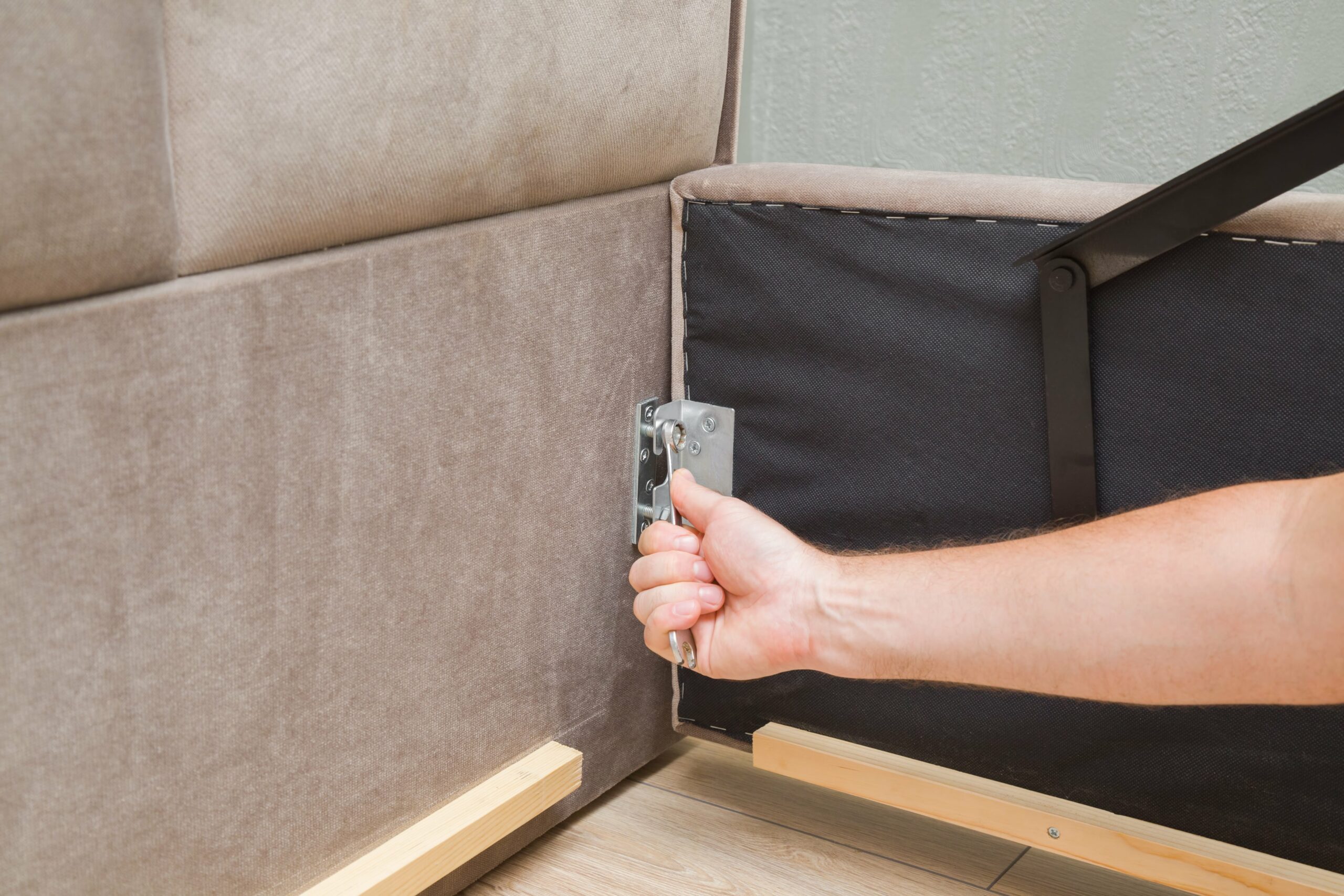
- Common connectors: slide-and-hook brackets, C-clips, alligator clips, bolts, cam locks, Velcro panels
- Hidden spots: under dust covers, behind corner wedges, under the chaise cushion
Flip back skirts and reach under edges with a flashlight. If you see metal brackets, they usually lift straight up or slide away from the hook. This core step supports how to disassemble a sectional sofa for disposal without damage.

Source: 1800gotjunk.com
Step-by-Step: How to Disassemble a Sectional Sofa for Disposal
Follow these steps in order. Keep your path clear and your hands safe. This is the heart of how to disassemble a sectional sofa for disposal.
- Remove all cushions and pillows
- Bag small items to keep the space clear.
- Check cushion zippers for lost items.
- Separate the modules
- Find the corner joint first.
- Lift one piece while a helper tilts the mate. Most brackets release with an up-and-out motion.
- If bolted, use the right socket or hex key and keep bolts in a labeled bag.
- Detach the chaise, wedge, and armless middles
- Chaises often have extra clips near the front rail.
- Set each module aside on a blanket.
- Remove legs and feet
- Many legs are screw-in posts. Turn counterclockwise by hand or with a wrench.
- Keep washers and bolts bagged and taped to that module.
- Expose the frame if needed
- Turn each piece on its back.
- Remove dust covers by pulling staples with a flathead screwdriver or staple puller.
- Disconnect recliner or power parts
- Unplug from the wall.
- Find quick-disconnect plugs under the seat.
- Label male and female ends with tape.
- Decide whether to cut for size reduction
- Only cut if you must fit small doors or when landfill rules need reduced volume.
- Slice fabric with a utility knife along seams.
- Use a hand saw to cut rails in half. Watch for staples and metal plates.
- Wrap sharp edges for safe carrying
- Use stretch wrap or blankets.
- Tape over staples to prevent cuts.
- Stack and stage parts for transport
- Keep modules upright and stable.
- Place legs and hardware bags inside a cushion cover.
Quick answers many readers ask inside this step:
- Do you need to remove upholstery to dispose? No, most haulers accept intact frames. Cut only to fit or reduce weight.
- Can you take it apart alone? You can, but a helper makes lifts safer and faster.
These steps work for most models and are the safest path for how to disassemble a sectional sofa for disposal at home.

Source: budgetdumpster.com
Handling Special Features: Recliners, Sleepers, and Power
Special modules add weight and wires. Take extra care.
- Manual recliners
- Pull the back-release levers at the rear seam to lift the backrest off.
- Slide the back up while a helper steadies the base.
- Power recliners and USB modules
- Unplug first. Remove batteries from any backup boxes.
- Label and disconnect harness plugs before lifting.
- Sleeper or pull-out bed
- Remove the mattress first.
- Find the hinge bolts that hold the metal frame to the wood rails.
- Support the mechanism while you unbolt to avoid a sudden drop.
- Storage chaise
- Empty the compartment.
- Unbolt the hinge arms if the lid blocks doorways.
This extra care helps you master how to disassemble a sectional sofa for disposal when heavy mechanisms are involved.

Source: 1800gotjunk.com
Disposal, Recycling, and Donation Options
You now have parts ready to move. Choose the best end-of-life path.
- Donation
- If the sofa is clean, pest-free, and not broken, call local charities.
- Many groups accept modules but often refuse recliner mechanisms.
- Bulk pickup
- Check city bulk pickup rules and schedule.
- Some areas limit the number of pieces per pickup.
- Transfer station or landfill
- Secure loose fabric in bags.
- Expect weight or volume fees.
- Recycling and diversion
- Some centers take metal frames and clean wood.
- Foam and fabric recycling is rare but possible in select regions.
- Junk removal services
- Ask for price by volume or item.
- Confirm if they sort for recycling.
Tip: Photograph the sofa before and after disassembly. Some services need proof of condition, and some cities need photos for bulk requests. Clear labels and clean cuts also speed drop-offs.

Source: junkrelief.com
Safety Tips and Common Mistakes to Avoid
Keep safety first. Small steps prevent big problems.
- Wear gloves and eye protection when cutting fabric or staples
- Lift with your legs and keep your back straight
- Do not cut near wires or power boxes
- Keep kids and pets out of the work area
- Bag and label all hardware at once
Avoid these mistakes:
- Forcing brackets. Lift to release before you pry.
- Skipping photos. Photos help you decode hidden joints.
- Cutting first. Try to unbolt or unclip before you saw.
- Leaving nails or staples exposed. Tape or bend them flat.
These safety rules are key parts of how to disassemble a sectional sofa for disposal without injury.

Source: cozylant.com
Timeline, Costs, and When to Hire a Pro
Time and cost depend on size, features, and access.
- Typical time
- Standard three-piece L: 45 to 90 minutes
- Add 30 to 60 minutes for recliners or sleepers
- Add 20 minutes for tight stairs
- Typical costs
- Tools and supplies: low if you already own basics
- City bulk pickup: often free or low fee
- Junk service: varies by volume and region
- Hire a pro when
- You have steep stairs or narrow doors
- The sofa is a heavy recliner or sleeper
- You lack safe lifting help or tools
Pros follow the same method shown here for how to disassemble a sectional sofa for disposal, but they bring crew and insurance.
My Field Notes: Lessons Learned the Hard Way
I have moved a sleeper down a 1920s stairwell with a 90-degree turn. The fix was simple. We pulled the backrests, then split the metal bed frame at the hinge bolts. It took 20 extra minutes and saved a wall repair.
I once saw a client cut fabric first and hit a harness wire. The recliner shorted, and the repair cost more than a haul-away. Since then, I always unplug, trace wires, and label plugs before any cut.
A quick win I use on every job: bag hardware and tape it to the module it came from. Even for disposal, this keeps small metal from scratching floors and saves time if plans change.
This real-world approach keeps you grounded as you learn how to disassemble a sectional sofa for disposal with less stress and mess.
Frequently Asked Questions of How to Disassemble a Sectional Sofa for Disposal
What tools do I need to take apart a sectional?
You need screwdrivers, a socket set, hex keys, a wrench, and a utility knife. Gloves, a dust mask, bags, and tape help keep it clean and safe.
Can I leave the upholstery on for bulk pickup?
Yes, in most cities you can. Check local rules for mattress-like cover laws or pest checks.
How do I separate modules stuck on slide brackets?
Lift one module straight up while tilting the mate slightly. Do not pry out; release the weight, then slide free.
Is it safe to cut the frame?
Yes, if you see no wires or metal plates at the cut line. Wear eye protection and use a hand saw for better control.
What should I do with the mattress from a sleeper?
Bag it and check local mattress disposal rules. Some areas require a special bag or fee.
How do I handle a power recliner safely?
Unplug from the wall, remove any backup battery, and label all connectors. Disconnect plugs before moving the seat base.
Can I donate only part of the sectional?
Sometimes yes, if the module is clean and in good shape. Call the charity first to confirm what they accept.
Conclusion
You can handle this project with a calm plan, the right tools, and clear steps. Separate the modules, bag hardware, remove legs, and cut only when size or rules demand it. Choose the best end path: donate, recycle, schedule bulk pickup, or hire a pro.
Start today. Walk your path, gather your tools, and follow the steps. If you found this guide on how to disassemble a sectional sofa for disposal helpful, share it, subscribe for more home projects, or leave a comment with your tricky layout.