The best console tables for small spaces are slim, sturdy, versatile pieces that add storage without blocking movement.
Choosing the best console tables for small spaces takes more than finding the narrowest design. You must balance depth, height, storage, strength, style, and safe clearance. This guide explains how to compare console tables, avoid common mistakes, and choose a piece that makes a compact entryway, hallway, living room, or apartment feel more useful and organized.
What Makes a Console Table Work in a Small Space?
A console table is a narrow table designed for walls, hallways, entryways, and areas behind sofas. It can hold keys, lamps, books, baskets, artwork, and daily essentials. In a small room, the right table should provide function without making the space feel crowded.
The best console tables for small spaces have a shallow profile. Most useful models measure between 10 and 14 inches deep. Some compact tables measure less than 10 inches, which can work well in tight hallways or narrow foyers.
A good console table should also leave enough room for people to walk past it. The Americans with Disabilities Act often uses 36 inches as a clear path benchmark in accessible routes. Homes do not always need to follow commercial accessibility rules, but the measurement offers a useful safety guide.
Look for these qualities:
• A slim depth that protects walking space
• A stable frame that does not wobble
• A height that suits nearby furniture
• Storage that matches your daily needs
• Rounded or softened edges in busy walkways
• A finish that suits your room and lifestyle
• Easy assembly and clear care instructions
The best console tables for small spaces act like quiet helpers. They hold what you need, support the room’s design, and stay out of the way.

Best Console Table Styles for Compact Rooms
Different table styles solve different space problems. Before shopping, consider where the table will sit and what you want it to do.
Slim Entryway Console Tables
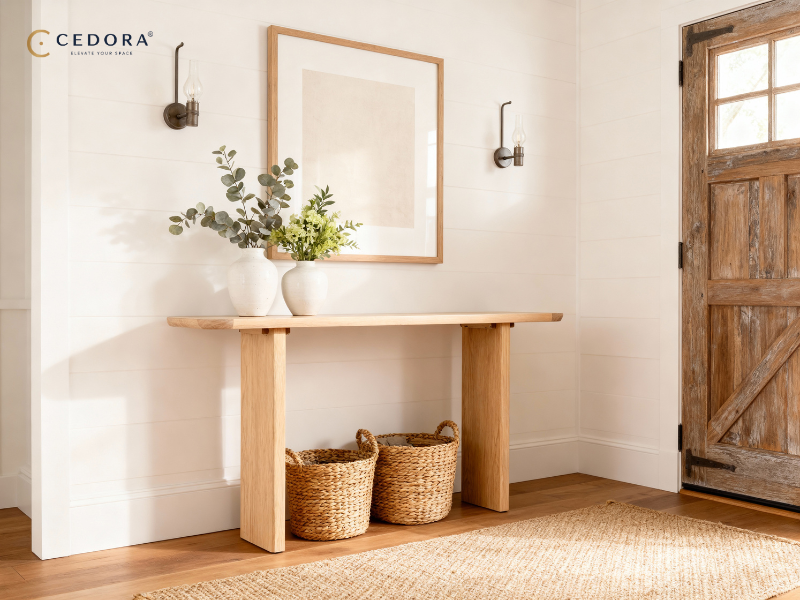
A slim entryway table is ideal for a front door, apartment foyer, or narrow hall. Choose a model with a drawer, lower shelf, or small cabinet for keys, mail, sunglasses, and dog leashes.
A table between 8 and 12 inches deep is often enough for an entryway. Measure the door swing first. The table should not block the door, closet, thermostat, or electrical panel.
Console Tables With Drawers
Drawers keep small items hidden and reduce visual clutter. They work well in homes where the console table serves as a daily drop zone.
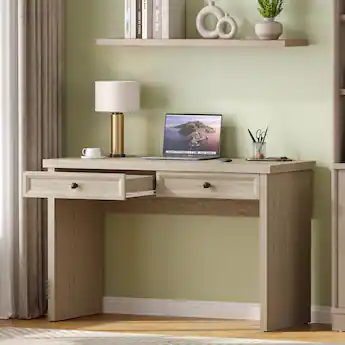
One or two drawers are usually enough. Too many drawers can add weight and make a small piece look bulky. Check the drawer slides before buying. Smooth metal glides tend to perform better than thin plastic tracks.
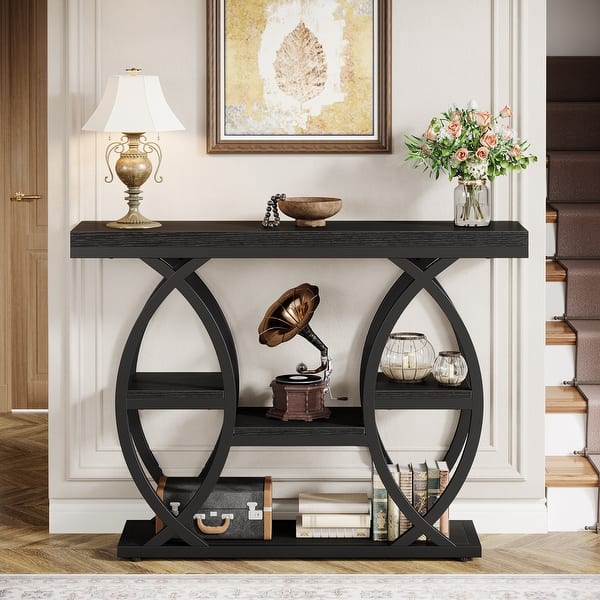
Console Tables With Shelves
Open shelves provide quick access to baskets, books, and decorative objects. They also make a narrow table look lighter than a fully enclosed cabinet.
Open shelving has one weakness: it can look untidy when overloaded. Use matching baskets or boxes to create a calm, organized appearance.
Floating Console Tables
A wall-mounted console table leaves the floor open. This can make a compact room look larger and makes cleaning easier.
Floating designs require careful installation. Mount the table into wall studs when possible, and follow the manufacturer’s weight limit. Drywall anchors alone may not support heavy books, ceramic lamps, or storage baskets.
Console Tables With Cabinets
A cabinet console provides hidden storage for shoes, cables, games, and household supplies. It is useful in living rooms and dining areas where clutter can build up quickly.
Choose doors with a simple opening system. In a tight space, sliding doors or lift-up doors may work better than wide swinging doors.
Nesting and Folding Console Tables
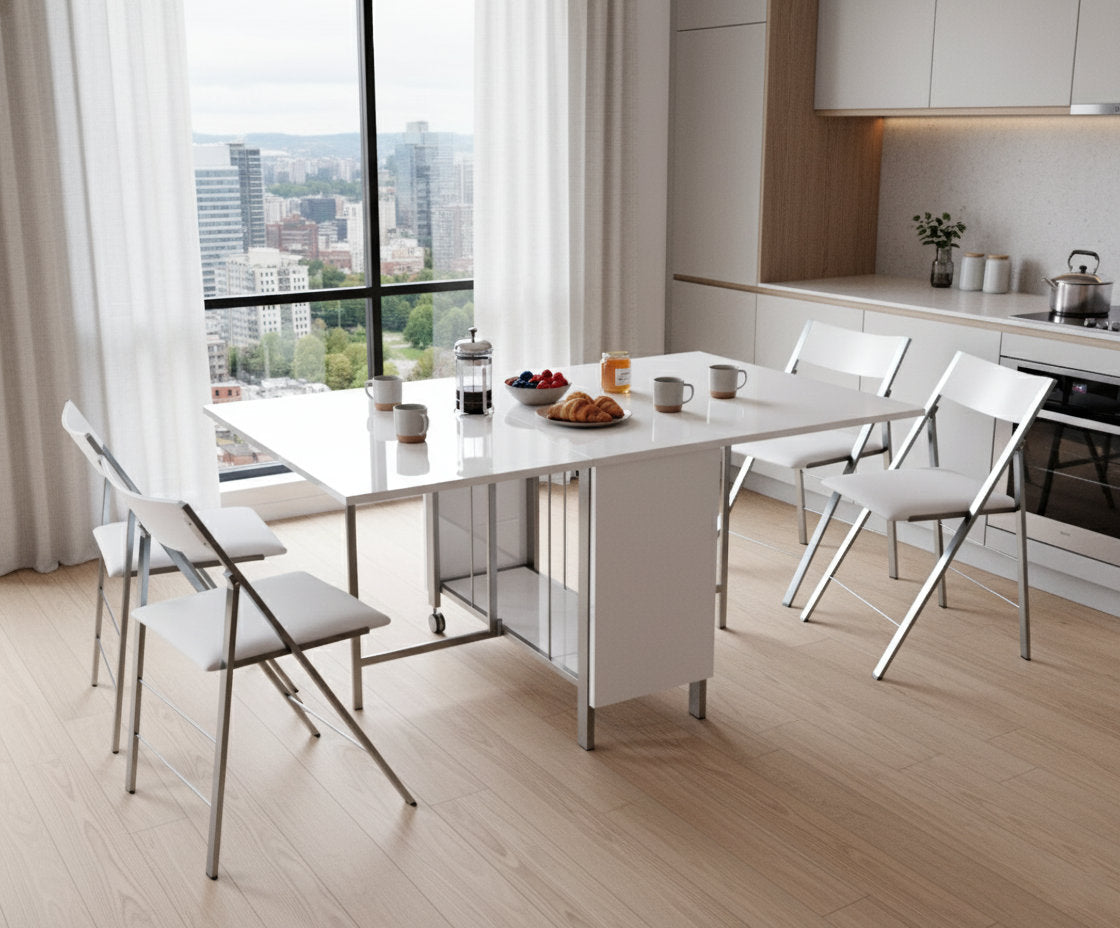
Nesting tables can separate when needed and stack when not in use. Folding models can also help renters or people who move often.
These designs may sacrifice some stability for flexibility. Inspect the hinges, locks, and joints before purchase, especially if you plan to use the table every day.
Source: bedbathandbeyond.com
How to Choose the Right Console Table Dimensions
Dimensions matter more than appearance in a small room. A beautiful table can still fail if it blocks traffic or overwhelms nearby furniture.
Measure the Available Wall
Measure the full wall, then subtract space for trim, outlets, vents, and doors. Do not assume the wall is perfectly straight. Older homes may have uneven walls or baseboards that affect the fit.
Use painter’s tape to mark the table’s length and depth on the floor. Leave the outline in place for a day. Walk around it during normal routines. This simple test often reveals problems that a product photo hides.
Choose the Correct Depth
Depth is one of the most important measurements for a small console table.
• 6 to 9 inches: Best for very narrow halls and small displays
• 10 to 12 inches: A practical range for most entryways
• 13 to 16 inches: Better for lamps, baskets, and larger storage
• More than 16 inches: May feel too deep in a narrow passage
A table depth of 10 to 12 inches often offers the best balance between storage and movement. However, your room should decide the final size.
Consider Table Height
Most console tables stand between 28 and 32 inches high. A table behind a sofa should sit close to the sofa back, usually within a few inches of its height.
For an entryway, height is less strict. The surface should feel comfortable when you place or pick up keys. Avoid a table that sits so low that it looks like a bench or so high that it becomes difficult to use.
Check Clearance
Leave clear space around the table for walking and cleaning. A narrow room may need more clearance than a large room because every inch affects movement.
Also check:
• Door and cabinet swings
• Drawer opening space
• Radiators and heating vents
• Electrical outlets
• Baseboards and wall trim
• Pet and child movement
The best console tables for small spaces fit the room before they fit the style.
Source: tribesigns.com
Materials and Construction: What Should You Look For?
A small console table still needs to handle daily use. Keys, bags, lamps, books, and decorative objects can create more weight than expected.
Solid Wood
Solid wood offers strength and a warm appearance. Oak, maple, rubberwood, pine, and acacia are common choices.
Wood can expand and contract with changes in humidity. Keep it away from direct heat and wipe spills quickly. A quality wood table may cost more, but it can last for many years with basic care.
Engineered Wood
Engineered wood includes materials such as medium-density fiberboard and particleboard. It can offer a smooth finish at a lower price.
Look closely at the edges and joints. Thick panels, reinforced corners, and strong hardware usually indicate better construction. Avoid pieces with swollen edges, exposed filler, or weak cam-lock joints.
Metal
Metal frames create a light, modern look and can provide strong support. Steel and iron are common in industrial-style tables.
Metal may show fingerprints, scratches, or rust if the finish is poor. Look for a baked or powder-coated finish when possible. Check that the feet have protective pads to prevent floor damage.
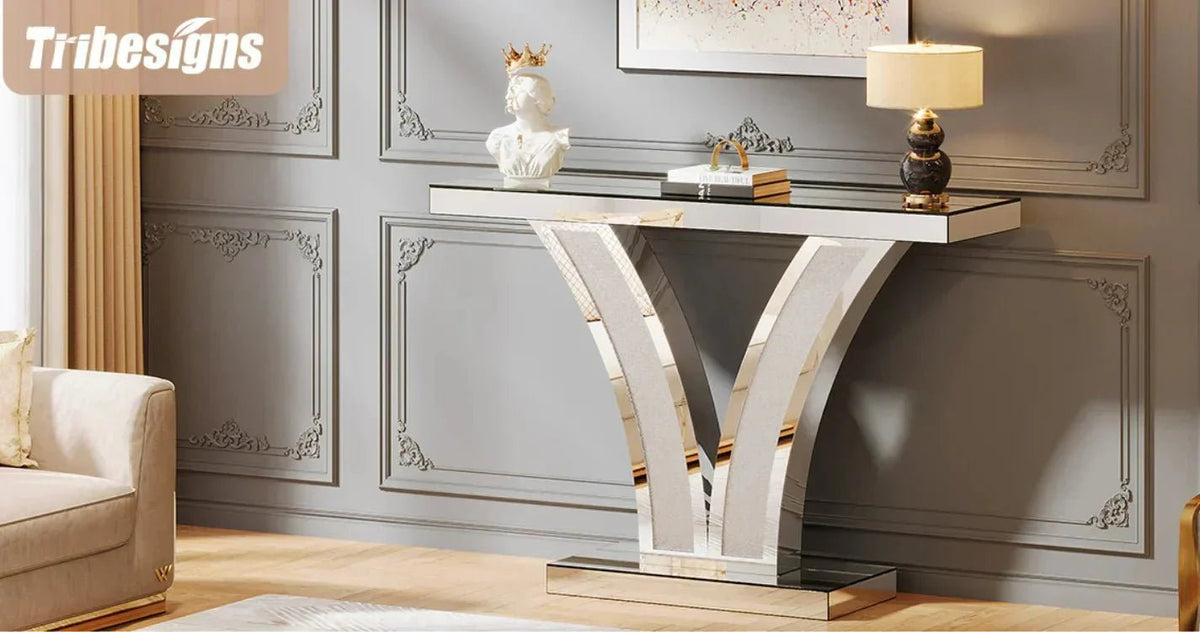
Glass
Glass can make a small room appear more open because it allows light to pass through. Tempered glass is a safer choice than ordinary glass because it is designed to resist breakage and crumble into smaller pieces when damaged.
Glass surfaces show dust and fingerprints quickly. They also may not suit homes with young children or active pets.
What Construction Details Matter?
Inspect the table from every angle. Pay attention to:
• Tight joints
• Even legs
• A level top
• Strong drawer slides
• Secure shelf supports
• Adjustable feet
• Smooth, sealed edges
• Anti-tip hardware
Furniture tip-over remains a serious safety issue, especially for children. Anchor tall or top-heavy furniture to the wall according to the manufacturer’s instructions.

Source: amazon.ae
Storage Features That Help Small Homes
A console table should solve a real problem. Storage is useful only when it matches the items you need to keep nearby.
Drawers for Small Essentials
Drawers are best for small items that create visual mess. Use them for keys, chargers, pens, masks, and mail.
A shallow drawer may look compact but hold less than expected. Check the inside dimensions, not only the outside measurements.
Lower Shelves for Baskets
A lower shelf can store baskets, shoes, folded blankets, or books. Baskets make open storage appear neat and protect items from dust.
Leave some empty space on the shelf. A shelf packed from end to end can make a small room feel heavy.
Cabinets for Hidden Clutter
Cabinets work well when the console table sits in a living room or dining area. Use them to store remote controls, board games, table linens, or pet supplies.
Ventilation matters if you plan to store electronics inside. Do not place warm devices in a closed cabinet unless the design allows proper airflow.
Cable Management
A console table often becomes a charging station. Look for rear cutouts, cable slots, or enough space to hide a power strip.
Keep cords away from walking paths. Loose wires can cause trips and make even the best console tables for small spaces look untidy.
Source: bestbuy.com
How to Style a Small Console Table
Good styling can make a console table feel intentional rather than crowded. Think of the surface as a small composition with a clear purpose.
Start with one large item, such as a lamp, mirror, vase, or framed print. Then add two or three smaller pieces. Vary their height and texture to create balance.
Try this simple formula:
- Place a mirror or artwork above the table.
- Add a lamp or tall vase on one side.
- Add a small bowl, plant, or stack of books on the other side.
- Leave part of the surface empty for daily use.
- Use the lower shelf for one basket or a small group of books.
A mirror can reflect light and make a narrow entryway feel wider. Choose a mirror that is narrower than the table, and mount it securely.
Avoid placing too many tiny objects together. Small items can become visual noise. One larger piece often looks calmer than six unrelated decorations.
In homes with children or pets, choose stable objects with wide bases. Avoid heavy items that could fall from a high surface.

Source: amazon.com
Best Console Tables for Small Spaces by Room
The ideal table changes based on the room.
Entryway
Choose a shallow table with a drawer or basket shelf. A small tray can hold keys, while a wall hook above the table can hold bags and coats.
Keep the floor open for shoes and movement. If the entryway is very narrow, consider a floating table.
Hallway
A hallway console should be narrow and free of sharp corners. Measure the walking path carefully before buying.
Use wall art, a slim lamp, or a small plant for decoration. Avoid bulky baskets that project into the path.
Living Room
A sofa table can hold lamps, books, remotes, and drinks. Select a table that sits close to the sofa’s height and leaves enough space for people to walk behind it.
A model with drawers can hide remote controls and charging cables. A lower shelf can hold baskets for blankets or toys.
Dining Room
A console table can act as a compact sideboard. Use it for serving dishes, table linens, or drink supplies.
Make sure the table does not reduce the space needed to pull out chairs. Measure with the chairs fully extended.
Bedroom
A slim console can serve as a vanity, writing desk, or place for a television. Choose a smooth surface that allows comfortable use.
If you use it as a desk, check the legroom and table height. A decorative console may not provide enough depth for a laptop and writing space.
Home Office
A narrow console can hold a printer, files, or office supplies. Confirm its weight capacity before placing heavy equipment on it.
For work use, cable management becomes especially important. A clean cord path protects both safety and appearance.
Source: com.au
Common Mistakes to Avoid
Even experienced shoppers can choose the wrong table when they focus only on style.
Buying Before Measuring
A product photo can make a table appear smaller than it is. Always check the assembled dimensions and compare them with your wall and walking path.
Choosing Too Much Depth
A deep top may offer more storage, but it can turn a hallway into an obstacle. In small spaces, depth often matters more than length.
Ignoring Weight Limits
A console table may look strong but have a low weight rating. Check the limits for the top, shelves, and drawers.
Skipping Wall Anchors
Tall or narrow furniture can tip if pulled or pushed. Use the included anti-tip kit, especially in homes with children or pets.
Overloading the Surface
Too many objects make a narrow table look smaller. Keep only the items you use or truly enjoy.
Forgetting Delivery Space
Measure elevators, stairwells, doorways, and tight turns. A table that fits the room may not fit through the route into the room.
A useful lesson from real room planning is to test the layout with cardboard first. It costs almost nothing and can prevent a costly return.

Source: amazon.ae
Where to Buy a Console Table
You can find small console tables through furniture stores, home improvement retailers, online marketplaces, and local makers. Each option has advantages and limits.
Furniture stores let you inspect the finish, stability, and color in person. Online shops offer more sizes and styles, but product photos may hide thin panels or uneven finishes.
Before ordering, review:
• Assembled dimensions
• Product weight
• Weight capacity
• Material details
• Return rules
• Assembly requirements
• Delivery method
• Warranty terms
• Customer photos
Read reviews for repeated comments, not just the star rating. Several buyers mentioning wobbling, poor instructions, or damaged corners may indicate a design issue.
Price is not a perfect measure of quality. A moderately priced table with strong joints and useful dimensions may outperform a costly piece that is too deep or poorly built.
Source: ofimobiliario.com
How to Care for a Console Table
Basic care helps a console table last longer.
Dust wood and metal surfaces with a soft, dry cloth. Use a slightly damp cloth for marks, then dry the surface. Avoid soaking unfinished wood or using harsh cleaners on painted finishes.
Use coasters beneath drinks, felt pads under decorations, and trays beneath plants. Water rings and scratches often happen during ordinary daily use rather than major accidents.
Check the screws and joints every few months. Tighten loose hardware before the table begins to wobble. Inspect wall anchors and anti-tip straps if the table is tall or heavily used.
Keep direct sunlight in mind. Strong sunlight can fade wood, laminate, fabric baskets, and painted finishes over time. Window coverings or a UV-filtering film can reduce this effect.
Frequently Asked Questions About Best Console Tables for Small Spaces
What is the ideal depth for a small console table?
A depth of 10 to 12 inches works well for many entryways and narrow rooms. For very tight areas, a 6 to 9-inch design may be safer, provided it offers enough surface space for your needs.
How narrow can a console table be?
Some console tables are only 6 inches deep. These very slim models suit hallways and small foyers, but they provide limited storage and may not support large lamps or wide baskets.
Should a console table be behind a sofa?
Yes, a console table can sit behind a sofa if it does not block walking space. Its height should be close to the sofa back, and the table should be secured if it is narrow or top-heavy.
Are floating console tables good for small spaces?
Floating console tables can work very well because they keep the floor open. They must be mounted correctly, preferably into wall studs, and should not carry more weight than the installation system allows.
What should I put on a small console table?
Use one tall item, one small functional item, and one decorative item. A lamp, catchall tray, framed photo, small plant, or compact stack of books can create a useful and balanced display.
Is a console table the same as a sofa table?
The terms are often used in similar ways, but a sofa table is usually designed to sit behind a sofa. A console table is a broader category that can work in entryways, hallways, dining rooms, and living rooms.
How do I stop a console table from wobbling?
Place it on a level surface, adjust its feet if available, and tighten all hardware. If the table remains unstable, check for warped parts or an uneven floor before adding weight.
Conclusion
The best console tables for small spaces combine a slim shape, reliable construction, useful storage, and a design that suits your room. Start by measuring the wall, walking path, door swings, and available depth. Then compare materials, weight limits, storage features, safety hardware, and return policies.
A narrow table does not have to feel plain or limited. With the right size and a simple styling plan, it can organize daily clutter and make a small room feel complete. Mark the space with painter’s tape, compare your measurements, and explore options that fit both your home and your routine.