A well-styled coffee table balances beauty, function, scale, texture, and enough space for daily life.
Learning how to decorate a coffee table can transform a plain living room into a warm, polished space. The best arrangements do more than look attractive; they support conversation, hold useful items, and reflect your personal style. This guide explains how to choose the right objects, create balance, avoid clutter, and style your table for everyday living.
Start With the Coffee Table’s Shape and Size
Before learning how to decorate a coffee table, study the table itself. Its shape, height, material, and position affect every decorating choice. A round table needs a different arrangement than a long rectangular table.
A coffee table should usually sit about 16 to 18 inches from the sofa. This distance leaves enough room for movement while keeping drinks and books within easy reach. The table should also be close in height to the sofa seat.
Use the table’s shape as a guide:
• Round tables work well with one central arrangement, such as a tray, bowl, or vase.
• Square tables often look balanced with a centered grouping or four small zones.
• Rectangular tables suit layered arrangements that run along the table’s length.
• Oval tables benefit from soft, flowing objects and fewer sharp corners.
• Glass tables need lighter, more open styling because the surface already creates visual space.
In my own room styling work, one common mistake is choosing accessories before checking scale. A small table can quickly feel crowded, while a large table may look unfinished with only one tiny object. Start by measuring the surface, then select pieces that fit its proportions.
Choose a Simple Decorating Formula
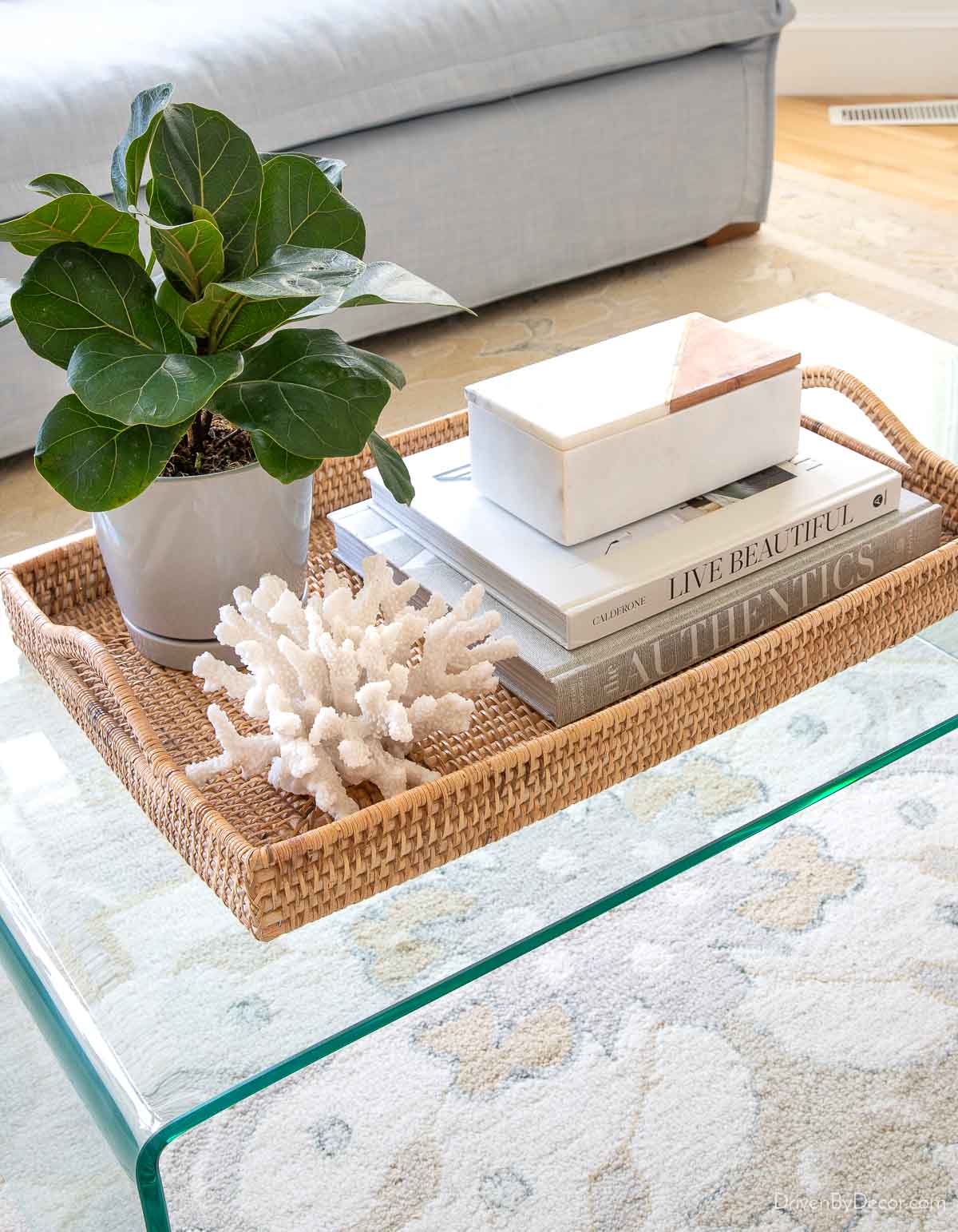
A clear formula makes it easier to learn how to decorate a coffee table without guessing. A useful arrangement often includes three parts: a tray, a stack of books, and one natural or sculptural object.
This formula works because each item has a purpose. The tray gathers small objects, books add height and personality, and the natural or sculptural piece creates a focal point.
Try this basic process:
- Place a tray near the center or slightly off-center.
- Add two or three books with attractive covers.
- Place a bowl, candle, vase, or small sculpture on top of or beside the books.
- Add one practical item, such as a coaster set or remote-control box.
- Remove anything that feels repeated or unnecessary.
Odd numbers often create a relaxed look. For example, combine three books, one vase, and one small bowl. This does not mean every table must follow a strict rule. It simply gives the eye a pleasing rhythm.
A tray is especially useful in busy homes. You can lift the entire arrangement when you need more space for snacks, games, or family activities. This small feature makes a coffee table both attractive and practical.
Source: drivenbydecor.com
Use Height, Layers, and Visual Balance
Good coffee table styling has movement. If every object is the same height, the display may appear flat. If every piece is tall, the table may feel heavy. Combine low, medium, and high objects to create a balanced arrangement.
For example, you might use:
• A low wooden tray
• Two medium-height books
• A tall vase with short branches
• A small bowl or candle
Layering also adds depth. Place a smaller item partly in front of a book or tray. Set a candle beside a vase rather than lining every object in one row. Leave some open space so the design can breathe.
Balance does not always mean symmetry. A tall vase on one side can balance a stack of books and a bowl on the other side. This is called asymmetrical balance. It feels natural and modern while still looking intentional.
When deciding how to decorate a coffee table, imagine the display as a small landscape. The tallest object acts like a tree, the books form gentle hills, and the empty space works like a path. This view helps prevent a crowded or random arrangement.

Source: stonegableblog.com
Add Texture and Natural Elements
Texture keeps a coffee table from looking cold or flat. Mix smooth, rough, soft, and reflective materials for a more inviting result.
Consider combining:
• A woven tray with a ceramic bowl
• A glass vase with fresh greenery
• A wooden object with a metal candleholder
• Linen-covered books with a polished stone
• A soft floral arrangement with a marble surface
Natural elements are especially effective. A small plant, a bowl of pinecones, fresh flowers, or a few branches can bring life to the room. Choose elements that suit the season and your care routine.
Fresh flowers create color and scent, but they need regular water and cleanup. Dried flowers and branches last longer, though they can collect dust. If you have pets or young children, check that every plant is safe before placing it within reach.
I once used a large floral arrangement on a low table and quickly learned that beauty can reduce function. Guests had to move it before setting down a drink. A shorter arrangement worked better because it kept sight lines open and left room for conversation.

Source: caitlinpappashome.com
Decorate With Books and Trays
Books are among the easiest ways to decorate a coffee table. They add height, color, and a sense of personality. Choose books that you have read, enjoy, or would be happy to discuss with guests.
Select books based on:
• Subject, such as travel, art, food, or design
• Cover color and connection to the room
• Size and weight
• Condition and ease of cleaning
Stack two to four books in descending size. Place the largest book on the bottom to create a stable base. Avoid using too many books, as a tall stack can look heavy and become difficult to use.
Trays help organize smaller pieces. A tray also creates a visual boundary, which makes a collection look planned instead of scattered. Wood adds warmth, metal adds polish, and lacquered trays create a cleaner modern effect.
For a family room, use a sturdy tray with rounded edges. In a formal sitting room, a decorative tray with brass, glass, or stone details may suit the setting. The best choice depends on both style and daily use.

Source: shegaveitago.com
Keep Function at the Center
The most attractive answer to how to decorate a coffee table is one that works for your lifestyle. A table should support daily habits rather than create extra work.
If your family watches television often, keep a small container for remotes. If you entertain guests, include coasters and leave clear space for cups. If children use the room, avoid fragile glass pieces and sharp corners.
Useful items can still look decorative:
• A lidded box can hide remotes.
• A shallow bowl can hold keys or reading glasses.
• A stack of magazines can add color.
• A candle can provide soft light during dinner.
• A small plant can fill an empty corner.
The key is to conceal visual noise without hiding everything. A clear surface feels calm, but a completely empty table may feel unfinished. Aim for a display that looks ready for life, not staged for a photograph.
A simple test is to sit on the sofa and reach toward the table. Can you place a drink down easily? Can you see across the room? Can you move the main objects in a few seconds? If not, edit the arrangement.

Source: blesserhouse.com
Match the Style of Your Living Room
Your coffee table decor should connect with the room around it. It does not need to match every piece, but it should repeat at least one color, material, shape, or design detail.
For a modern room, use:
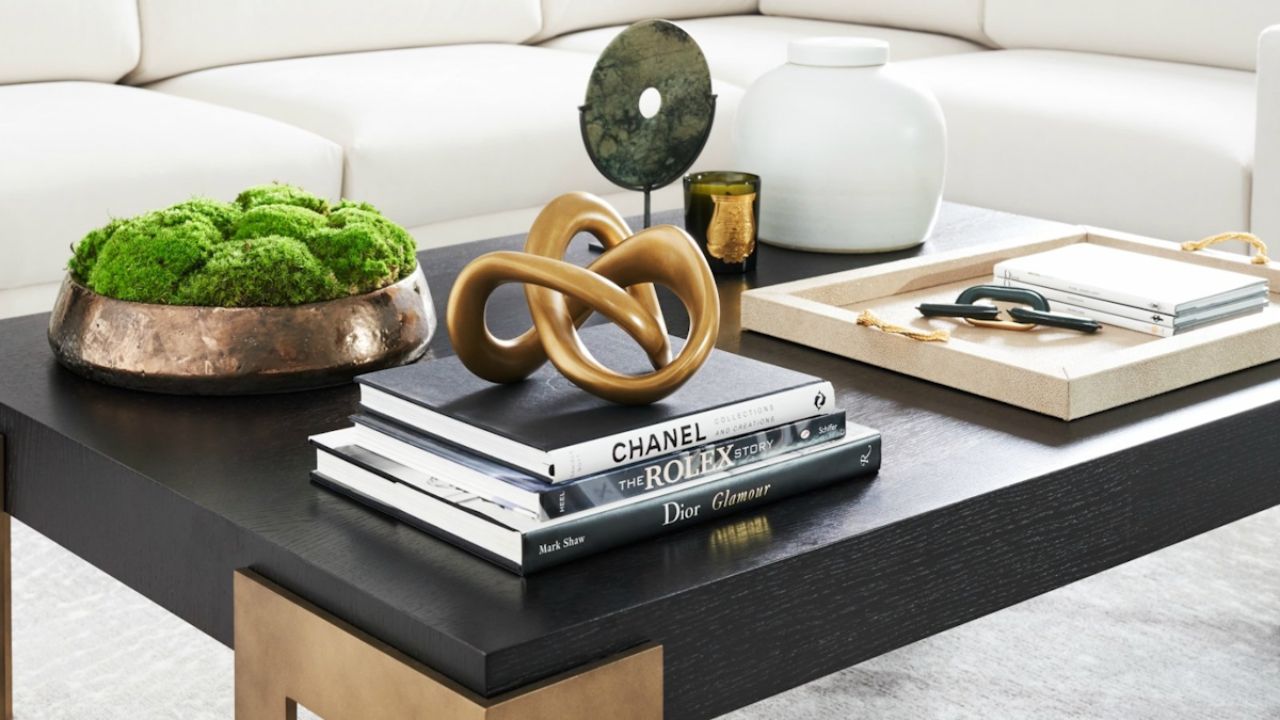
• Clean-lined trays
• Neutral books
• Sculptural objects
• Black, white, glass, or metal accents
For a traditional room, consider:
• Classic books
• A ceramic vase
• Brass details
• Floral arrangements
• Warm wood tones
For a farmhouse or rustic room, try:
• Woven baskets
• Distressed wood
• Stone bowls
• Simple greenery
• Neutral linen
For a bohemian room, layer:
• Patterned textiles
• Handcrafted pottery
• Colorful books
• Natural wood
• Collected travel objects
Color repetition creates unity. If your room has blue pillows, repeat a small amount of blue in a book cover or ceramic bowl. If the sofa has warm beige tones, use wood, woven fibers, or cream-colored accessories to support that palette.
Avoid adding too many unrelated colors. Three main colors are often enough for a calm and coordinated display.
Source: uniquehomefurniture.com
Create Seasonal Coffee Table Decor
Seasonal styling is an easy way to refresh the room without buying new furniture. Change only a few objects while keeping the main structure in place.
In spring, use light flowers, pale ceramics, and green branches. In summer, add shells, bright books, or a glass bowl. For fall, choose warm wood, amber glass, small pumpkins, or dried leaves. In winter, use evergreen branches, pinecones, candles, and rich textures.
Seasonal decor should remain simple. Too many themed items can make the table look crowded or temporary. One natural element, one color change, and one texture shift are usually enough.
Use safe candles and keep flames away from books, plants, curtains, and other flammable objects. Battery-operated candles are a useful choice for homes with children, pets, or heavy daily traffic.
Avoid Common Coffee Table Decorating Mistakes
Knowing what not to do is just as important as knowing how to decorate a coffee table. Small changes often improve the entire room.
Avoid these common problems:
• Using too many small objects that create visual clutter
• Choosing decor that blocks the view across the room
• Filling every inch of the table
• Ignoring the table’s height and proportions
• Using only hard materials with no soft texture
• Placing fragile objects where children or pets can reach them
• Selecting accessories that do not relate to the rest of the room
• Forgetting space for drinks, books, and everyday items
Another mistake is arranging everything against the wall of the table. This leaves the center empty and makes the display feel disconnected. Bring some objects toward the middle, while still leaving enough open space for use.
After styling, take a photo from the sofa. A photograph often reveals problems that are hard to see in person, such as uneven height, excess clutter, or a missing focal point. This is a professional styling trick that anyone can use.
Choose Safe and Easy-Care Accessories
A beautiful coffee table should not demand constant maintenance. Choose materials that suit the amount of use the room receives.
For busy households, consider:
• Washable trays
• Durable ceramic bowls
• Sealed wood
• Faux greenery
• Lidded storage boxes
• Rounded decorative objects
Natural stone, untreated wood, and delicate metals may need special care. Use coasters under drinks and avoid placing wet vases directly on wooden surfaces. A waterproof liner inside a tray can protect the table from water marks.
Dust is another practical concern. Objects with many small grooves can take longer to clean. Keep the display simple enough to wipe around each item once a week.
If you use books, avoid placing them directly beneath a leaking vase. Even a small amount of moisture can damage paper and cause stains. Place flowers in a sealed container and check the surface often.
A Five-Minute Styling Method
If you want to know how to decorate a coffee table quickly, use this five-minute method. It works for a new arrangement or a quick room refresh.
- Remove every object from the table.
- Wipe the surface with a suitable cleaner.
- Choose one large anchor, such as a tray, bowl, or stack of books.
- Add one tall object and one low object.
- Add a useful item, such as coasters or a lidded box.
- Step back and remove one piece if the table feels crowded.
- Check the table from several seats in the room.
This method creates a finished look without requiring a large shopping trip. It also helps you see which items truly belong on the table.
When I style a room, I often remove one item at the end. The display usually looks better with that final edit. Empty space is not wasted space; it gives important objects room to stand out.
Frequently Asked Questions About How to Decorate a Coffee Table
What should be placed in the center of a coffee table?
A tray, bowl, vase, or small sculptural object can serve as a center point. Choose an item that fits the table’s size and does not block conversation or the view across the room.
How many items should be on a coffee table?
Most coffee tables look balanced with three to seven main items grouped into one or two arrangements. The right number depends on the table size, object scale, and how much open space you need.
Should a coffee table match the television stand?
The coffee table does not need to match the television stand exactly. However, repeating a material, color, or shape can make both pieces feel connected.
How do you decorate a small coffee table?
Use one tray, a short stack of books, and one compact object. Select pieces with more than one purpose, and avoid tall decor that makes the small table feel crowded.
How do you keep coffee table decor from looking cluttered?
Group small items on a tray, vary the heights, and leave clear space around the main arrangement. Remove anything that has no practical or visual purpose.
Is it better to use real or artificial plants on a coffee table?
Real plants add natural texture but need light and water. Artificial plants are easier to maintain, but choose high-quality options and clean them often so they look realistic.
Conclusion
Learning how to decorate a coffee table is mainly about balance. Combine useful items with attractive pieces, vary height and texture, and leave enough open space for daily life. A tray, books, natural elements, and one personal object can create a polished look without clutter.
Start by clearing your table and adding only a few items you genuinely enjoy. Test the arrangement from the sofa, remove anything that feels excessive, and adjust it as your needs change. Share your favorite coffee table styling idea or explore more home decorating guides for practical ways to refresh your space.